Thursday, July 9, 2026

Study suggests Earth might survive sun’s final phase

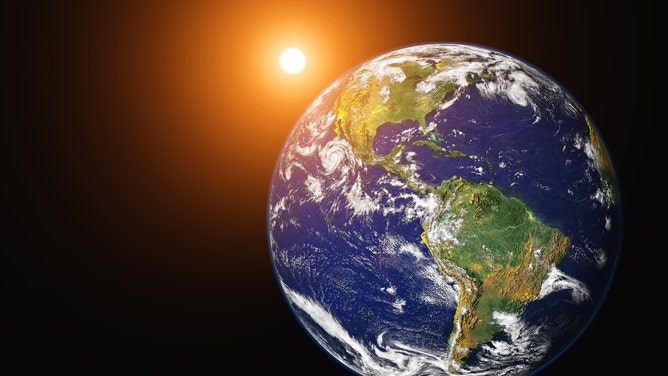
A recent study published in Astronomy and Astrophysics offers new insights into what will happen to Earth when the Sun eventually dies. This development is important as it challenges long-held views about our planet’s fate.

In about five billion years, the Sun will exhaust its fuel and expand into a red giant, a stage marking the end of its life. For years, scientists believed this would result in the destruction of Mercury, Venus, and Earth. However, the new research indicates that Earth’s future may depend on two key scenarios.

The first factor is the strength of the Sun’s gravitational tidal interactions, which influence how the planets orbit. Earth may either be pulled in and consumed by the expanding Sun or drift to a wider orbit. The second factor is the Sun’s mass-loss rates. If these rates are low, Earth could be engulfed; if high, our planet might manage to survive.

AGB, or Asymptotic Giant Branch, describes the more explosive phase of the red giant stage, during which the Sun will violently shed its outer layers into space. The study notes that uncertainty remains around these mass-loss rates, leaving Earth’s final fate ambiguous.

Researchers studied a nearby star, L2 Pup, which resembles what the Sun will become. By observing L2 Pup, they measured how much mass this star is currently losing, allowing them to reconsider Earth’s chances of survival.

While this research brings a sense of hope, it ultimately underscores that humanity will face significant challenges as the Sun enters its final phases.


Test Your Understanding

Start Quiz

Vocabulary List:
6 words · tap to reveal
ON

Accent

insights/ˈɪnˌsaɪts/noun
new knowledge or understanding about something

exhaust/ɪɡˈzɔst/verb
use up all of something, like fuel

expand/ɪkˈspænd/verb
get bigger in size or volume

tidal/ˈtaɪdəl/adjective
related to the pull of ocean tides

engulfed/ɪnˈɡʌlft/verb
completely covered or surrounded by something

ambiguous/æmˈbɪɡjuəs/adjective
not clear or open to different meanings

How much do you know?

What will happen to the Sun in about five billion years?
It will become a black hole
It will expand into a red giant
It will remain the same
It will disappear completely
What are the two key scenarios that might affect Earth's future?
Gravitational tides and solar flares
Mass-loss rates and tidal interactions
Planetary alignment and solar winds
Orbital paths and moon phases
What does AGB stand for?
Asymptotic Giant Burn
Asymptotic Giant Branch
Astrophysical Gravitational Behavior
Astrophysical Giant Branch
What is the fate of Earth if the Sun's mass-loss rates are low?
Earth will drift to a wider orbit
Earth could be engulfed
Earth will be destroyed
Earth will remain unaffected
Which nearby star did researchers study to understand the Sun's future?
Proxima Centauri
L2 Pup
Sirius
Betelgeuse
According to the recent study, what does the uncertainty around mass-loss rates imply?
Earth's fate is certain
Earth's final fate remains ambiguous
Earth will definitely survive
Earth will definitely be destroyed
The Sun will remain unchanged for the next five billion years.
The study indicates Earth's future may depend on the Sun's mass-loss rates.
AGB refers to the stable phase of the Sun’s life.
The research only studied Solar System planets and not other stars.
Humanity will face challenges as the Sun enters its final phases according to the research.
Earth will definitely be consumed by the Sun when it becomes a red giant.
In about five billion years, the Sun will exhaust its fuel and expand into a red giant, marking the end of its life .
The first factor affecting Earth's fate is the strength of the Sun's gravitational tidal .
If the Sun's mass-loss rates are , Earth could be engulfed.
AGB describes the more phase of the red giant stage.
Researchers observed L2 Pup to measure how much this star is currently losing.
The study suggests that uncertainty around mass-loss rates leaves Earth's final ambiguous.
This question is required

Test Your Understanding

Start Quiz
Vocabulary List:
6 words · tap to reveal
ON
Accent
insights/ˈɪnˌsaɪts/noun
new knowledge or understanding about something
exhaust/ɪɡˈzɔst/verb
use up all of something, like fuel
expand/ɪkˈspænd/verb
get bigger in size or volume
tidal/ˈtaɪdəl/adjective
related to the pull of ocean tides
engulfed/ɪnˈɡʌlft/verb
completely covered or surrounded by something
ambiguous/æmˈbɪɡjuəs/adjective
not clear or open to different meanings

How much do you know?

What will happen to the Sun in about five billion years?
It will become a black hole
It will expand into a red giant
It will remain the same
It will disappear completely
What are the two key scenarios that might affect Earth's future?
Gravitational tides and solar flares
Mass-loss rates and tidal interactions
Planetary alignment and solar winds
Orbital paths and moon phases
What does AGB stand for?
Asymptotic Giant Burn
Asymptotic Giant Branch
Astrophysical Gravitational Behavior
Astrophysical Giant Branch
What is the fate of Earth if the Sun's mass-loss rates are low?
Earth will drift to a wider orbit
Earth could be engulfed
Earth will be destroyed
Earth will remain unaffected
Which nearby star did researchers study to understand the Sun's future?
Proxima Centauri
L2 Pup
Sirius
Betelgeuse
According to the recent study, what does the uncertainty around mass-loss rates imply?
Earth's fate is certain
Earth's final fate remains ambiguous
Earth will definitely survive
Earth will definitely be destroyed
The Sun will remain unchanged for the next five billion years.
The study indicates Earth's future may depend on the Sun's mass-loss rates.
AGB refers to the stable phase of the Sun’s life.
The research only studied Solar System planets and not other stars.
Humanity will face challenges as the Sun enters its final phases according to the research.
Earth will definitely be consumed by the Sun when it becomes a red giant.
In about five billion years, the Sun will exhaust its fuel and expand into a red giant, marking the end of its life .
The first factor affecting Earth's fate is the strength of the Sun's gravitational tidal .
If the Sun's mass-loss rates are , Earth could be engulfed.
AGB describes the more phase of the red giant stage.
Researchers observed L2 Pup to measure how much this star is currently losing.
The study suggests that uncertainty around mass-loss rates leaves Earth's final ambiguous.
This question is required

Read More