

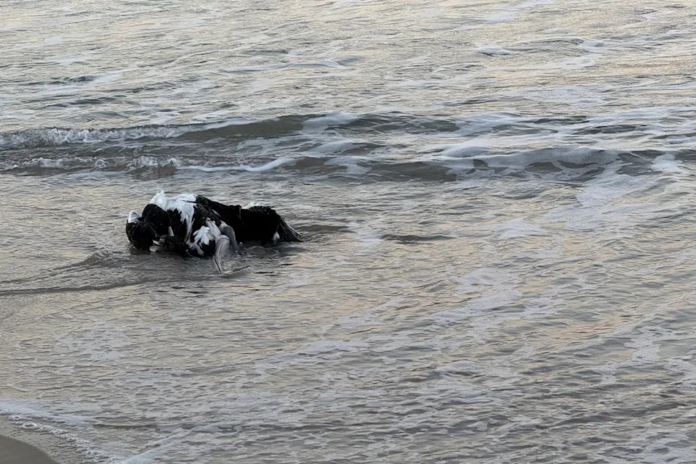
A dog walker’s visit to a serene Australian beach took a disturbing turn when he encountered a dark mass on the sand. David Parker initially thought it was “someone’s old coat” being battered by the waves at Bathers Beach in Fremantle. However, as he approached, he realised it was the lifeless body of a pelican. Parker described the sight as “confronting,” noting that he had never seen a dead one before.
This discovery comes against a backdrop of increasing concern, as H5 bird flu recently arrived in Australia, adding a grim context to this unfortunate find. While the virus had not yet been detected in pelicans in Australia, the federal government released a risk assessment indicating a “very high” threat to the species. Globally, the disease has been devastating for pelican populations, with approximately 40 percent mortality in Peru reported. Additionally, in Australia, the virus has led to significant die-offs of greater crested terns and has spread to seagulls.
The dead pelican has been reported to authorities for further examination via a 24-hour Emergency Animal Disease Hotline. The cause of death remains uncertain, but recent cases in the state indicate that botulism, a soil-borne illness exacerbated by recent heatwaves, has contributed to avian fatalities. Both bird flu and botulism can manifest similar neurological symptoms in birds, complicating diagnosis.
The Department of Primary Industries and Regional Development stated that the pelican has been tested and removed from the beach. Officials emphasised that public reports are crucial in detecting the virus, urging anyone to provide specific details about any observed cases. These reports are assessed based on the risk of H5 bird flu and prioritised for further investigation or testing.
Test Your Understanding
How much do you know?



