Monday, August 3, 2026

Earth’s Inner Core May Contain Unique Extreme Hydrogen

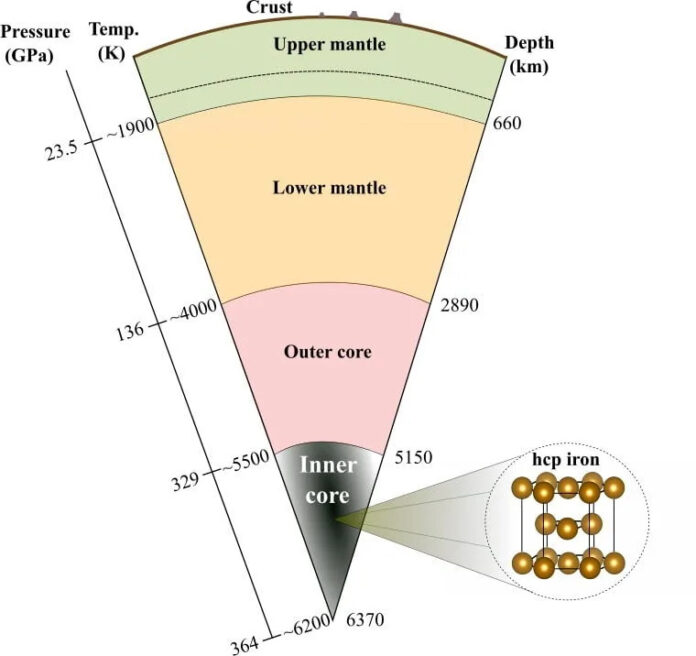
The Earth has many layers, similar to a nesting doll. The deepest part, called the core, is still mysterious. Very few people have explored the ocean’s deepest points or the Moon, and no one can reach the Earth’s core. The core is very hot and under immense pressure.

Recently, scientists studied a strange type of hydrogen called superionic hydrogen. This form flows like liquid and can conduct electricity. They believe this hydrogen might be found in large amounts in the core, but nowhere else on Earth.

To understand superionic hydrogen, the researchers looked at two forms: hexagonal close-packed and body-centered cubic. Each structure behaves differently under extreme conditions. The researchers think that as temperatures rise, the body-centered cubic form might become more common. However, extreme heat may melt it into a mix.

The scientists also found a gradient of hydrogen concentration in the core. This means that the amount of hydrogen changes as you move from the outer core to the inner core. This discovery helps explain how the Earth’s core works and may be important for understanding other elements as well.


Test Your Understanding

Start Quiz

Vocabulary List:
6 words · tap to reveal
ON

Accent

superionic/ˌsuːpərˈaɪɑnɪk/adjective
very hot form of hydrogen that flows

conduct/kənˈdʌkt/verb
to let electricity or heat move through

hexagonal/hɛkˈsæɡənəl/adjective
having six sides or six parts shape

cubic/ˈkjuːbɪk/adjective
a box with six flat faces

gradient/ˈɡreɪdiənt/noun
change in amount from one place to another

concentration/ˌkɑnsənˈtreɪʃən/noun
how much of one substance is present

How much do you know?

What is the deepest part of the Earth called?
Mantle
Crust
Core
Outer Core
What type of hydrogen have scientists recently studied?
Liquid hydrogen
Superionic hydrogen
Gaseous hydrogen
Solid hydrogen
What are the two forms of superionic hydrogen studied by researchers?
Hexagonal close-packed and body-centered cubic
Cubic and tetragonal
Hexagonal and octagonal
Body-centered and face-centered
What happens to body-centered cubic hydrogen as temperatures rise?
It becomes a solid
It becomes more common
It disappears
It becomes a gas
What is a result of the extreme heat in the Earth's core?
It cold down the core
It melts hydrogen into a mix
It solidifies hydrogen
It creates diamonds
What does the gradient of hydrogen concentration indicate?
Hydrogen is uniform throughout the core
Hydrogen concentration increases towards the inner core
Hydrogen concentration decreases towards the outer core
Hydrogen concentration changes from outer to inner core
The Earth's core is easily reachable by humans.
Superionic hydrogen can conduct electricity.
Only one form of superionic hydrogen exists.
Extreme pressure exists in the Earth's core.
Scientists believe superionic hydrogen can be found in multiple places on Earth.
The discovery of hydrogen concentration in the core is unimportant for understanding other elements.
The deepest part of the Earth is called the core.
Superionic hydrogen flows like and can conduct electricity.
The two forms of superionic hydrogen are hexagonal close-packed and centered cubic.
As temperatures rise, the body-centered cubic form may become more .
The amount of hydrogen changes as you move from the core to the inner core.
Extreme heat in the core may hydrogen into a mix.
This question is required

Test Your Understanding

Start Quiz
Vocabulary List:
6 words · tap to reveal
ON
Accent
superionic/ˌsuːpərˈaɪɑnɪk/adjective
very hot form of hydrogen that flows
conduct/kənˈdʌkt/verb
to let electricity or heat move through
hexagonal/hɛkˈsæɡənəl/adjective
having six sides or six parts shape
cubic/ˈkjuːbɪk/adjective
a box with six flat faces
gradient/ˈɡreɪdiənt/noun
change in amount from one place to another
concentration/ˌkɑnsənˈtreɪʃən/noun
how much of one substance is present

How much do you know?

What is the deepest part of the Earth called?
Mantle
Crust
Core
Outer Core
What type of hydrogen have scientists recently studied?
Liquid hydrogen
Superionic hydrogen
Gaseous hydrogen
Solid hydrogen
What are the two forms of superionic hydrogen studied by researchers?
Hexagonal close-packed and body-centered cubic
Cubic and tetragonal
Hexagonal and octagonal
Body-centered and face-centered
What happens to body-centered cubic hydrogen as temperatures rise?
It becomes a solid
It becomes more common
It disappears
It becomes a gas
What is a result of the extreme heat in the Earth's core?
It cold down the core
It melts hydrogen into a mix
It solidifies hydrogen
It creates diamonds
What does the gradient of hydrogen concentration indicate?
Hydrogen is uniform throughout the core
Hydrogen concentration increases towards the inner core
Hydrogen concentration decreases towards the outer core
Hydrogen concentration changes from outer to inner core
The Earth's core is easily reachable by humans.
Superionic hydrogen can conduct electricity.
Only one form of superionic hydrogen exists.
Extreme pressure exists in the Earth's core.
Scientists believe superionic hydrogen can be found in multiple places on Earth.
The discovery of hydrogen concentration in the core is unimportant for understanding other elements.
The deepest part of the Earth is called the core.
Superionic hydrogen flows like and can conduct electricity.
The two forms of superionic hydrogen are hexagonal close-packed and centered cubic.
As temperatures rise, the body-centered cubic form may become more .
The amount of hydrogen changes as you move from the core to the inner core.
Extreme heat in the core may hydrogen into a mix.
This question is required

Read More