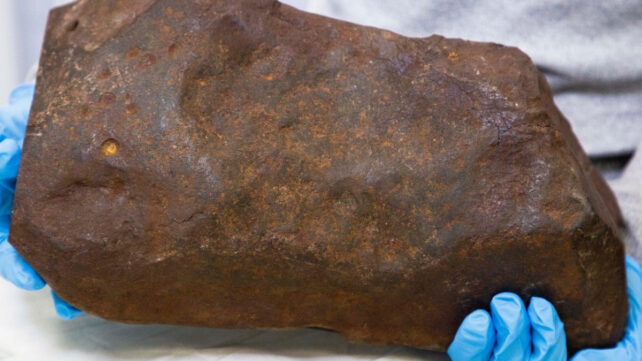
David Hole spends his weekends in Maryborough, a small town northwest of Melbourne, metal detecting in a regional park. This area was central to Victoria’s 19th-century gold rush, where many men previously found gold nuggets. In May 2015, Hole’s metal detector indicated a strong signal.
Excited, Hole dug into the clay and unearthed a large rock, about the size of a shoebox. It felt unusually heavy and had a textured surface, suggesting something extraordinary inside. Confident it contained a gold nugget, he attempted various methods to open it, including using a rock saw and an angle grinder, but was unsuccessful. Even a sledgehammer could not break it. The rock’s toughness hinted that it might not be ordinary.
After years of curiosity, Hole took the rock to the geology department at Melbourne Museum in 2018. Dermot Henry, the head of sciences at Museums Victoria, noted that most rocks brought in are often common stones. However, this specimen was different.
The rock displayed characteristics, called regmaglypts, that formed when an object enters Earth’s atmosphere at high speed. Weighing 17 kilograms, it was later identified as the first meteorite found in Victoria since 1995. Inside, researchers discovered chondrules—small mineral droplets formed in the early solar system—confirming the rock as a chondrite, a type of meteorite.
The Maryborough meteorite is now part of Museums Victoria’s State Collection, where it can be viewed by the public. Henry stated that meteorites offer valuable insights into the origins of our solar system.
Test Your Understanding
How much do you know?