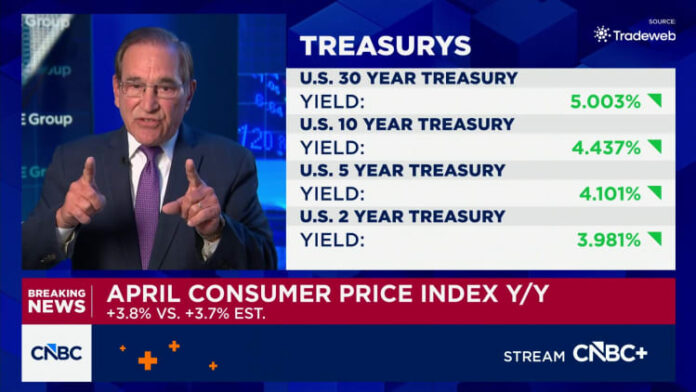
Consumer prices in the United States rose unexpectedly in April, intensifying worries about inflation and its effects on the economy. The Bureau of Labor Statistics reported a seasonally adjusted increase of 0.6% in the consumer price index (CPI) for the month, bringing the annual inflation rate to 3.8%. While the monthly increase matched expectations, the annual figure exceeded the Dow Jones forecast by 0.1 percentage point.
When excluding volatile categories such as food and energy, the core CPI grew by 0.4% for April, resulting in an annual increase of 2.8%. These figures indicate that inflation remains significantly above the Federal Reserve’s target of 2%. The annual inflation rate recorded was the highest since May 2023 and represented a rise of half a percentage point since March. Core inflation, meanwhile, increased by 0.2 percentage point over the year.
Energy prices played a pivotal role in the surge, climbing by 3.8% for the month, with food prices also increasing by 0.5%. Over the past year, energy costs rose by 17.9%, while food prices increased by 3.2%. Notably, the gasoline index surged by 28.4% annually. Other areas contributing to inflation included rising shelter costs, higher apparel prices due to tariffs, and increased airline fares, which saw a significant annual gain of 20.7%.
The report also provided disheartening news for workers, as real average hourly wages dropped by 0.5% monthly and by 0.3% annually. Following the announcement, stock market futures turned negative, and Treasury yields increased. A rise in the likelihood of a Federal Reserve interest rate hike by the year’s end was also noted, now estimated at around 30%.
The latest inflation data arrives at a critical juncture for the Federal Reserve, which has maintained its benchmark interest rate throughout the year amidst divided opinions among policymakers regarding future directions. The Fed’s most recent meeting in late April witnessed dissent from four members, the highest such discontent since 1992. Incoming Chair Kevin Warsh’s advocacy for lower rates conflicts with the backdrop of rising inflation influenced by geopolitical tensions, particularly in Iran, which have driven oil prices above $100 per barrel. Analysts suggest that further raising interest rates may become necessary as inflation persists and the labour market remains resilient.
Test Your Understanding
How much do you know?