Saturday, May 9, 2026

Engineers Create 500-Watt Laser Rover for Moon Crater Exploration

A European concept aims to use a laser beam to operate a rover in the Moon’s permanently shadowed areas. These regions are thought to contain water ice, a key resource for future space exploration.

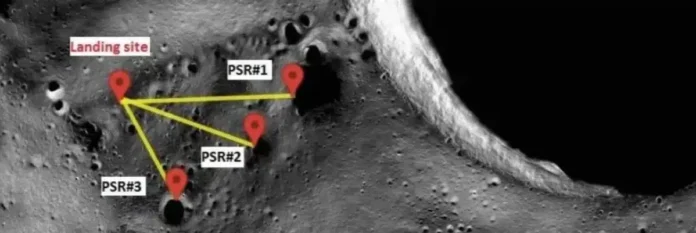
The plan, developed under the European Space Agency (ESA) technology programmes, allows a robotic rover to work in total darkness. Instead of relying solely on onboard batteries, energy could be transmitted over distances of up to 15 kilometres, enabling the rover to move continuously even where sunlight does not reach.

In recent years, interest in these shadowed regions has increased. Multiple missions have found hydrogen, a strong sign of ice. Data from NASA’s Lunar Reconnaissance Orbiter, along with other missions, suggest that this ice may have remained stable for billions of years.

Water ice could be vital for providing drinking water, producing oxygen, and even creating fuel. However, exploring these cold and dark areas poses significant challenges.

Traditional power systems often use nuclear-based generators, which can ensure a stable energy supply but come with drawbacks such as cost and engineering complexity. In contrast, the proposed laser system reduces heat management issues and minimizes thermal impact on ice.

The project, called PHILIP (powering rovers by high intensity laser induction on planets), involves placing a lander in a sunlit zone near de Gerlache and Shackleton craters. This lander would aim a 500-watt infrared laser at a 250 kg rover, allowing it to convert the laser energy into electricity. Testing has already occurred in conditions similar to those on the Moon, and if successful, the project could lead to exploring previously inaccessible parts of the lunar surface.


Test Your Understanding

Start Quiz

Vocabulary List:
6 words · tap to reveal
ON

Accent

shadowed/ˈʃædoʊd/adjective
covered in darkness with very little light

rover/ˈroʊvər/noun
a small vehicle that moves over a planet

transmitted/trænsˈmɪtɪd/verb
sent from one place to another

infrared/ˌɪnfrəˈrɛd/adjective
light we cannot see that produces heat

convert/kənˈvɝt/verb
change something into a different form

inaccessible/ˌɪnækˈsɛsəbəl/adjective
not able to be reached or used

How much do you know?

What is the primary resource thought to be found in the Moon's permanently shadowed areas?
Hydrogen
Water ice
Helium
Solar power
How far can energy be transmitted to power the rover?
5 kilometers
10 kilometers
15 kilometers
20 kilometers
What does the project called PHILIP stand for?
Powering Horizons in Laser-Induced Paths
Powering Rovers by High Intensity Laser Induction on Planets
Powering Rovers by High Intensity Laser Interaction and Production
Powering Rovers with Helium Induction for Light Exploration
What type of laser is used in the PHILIP project?
Green laser
500-watt infrared laser
Blue laser
Coherent laser
What is one potential benefit of water ice found on the Moon?
It can be used as a building material
It can provide drinking water
It can generate energy
It can be used for agriculture
Which two craters is the lander planned to be near?
Tycho and Copernicus
Clavius and Aristarchus
Gerlache and Shackleton
Kepler and Plato
The laser system proposed for the rover aims to reduce heat management issues.
The European Space Agency is developing the PHILIP project.
Traditional power systems for rovers mainly rely on solar panels.
The rover can operate in areas where sunlight does reach.
Exploring the Moon's permanently shadowed areas is without challenges.
Testing for the PHILIP project has already taken place in conditions similar to those on Mars.
The regions in the Moon's shadow are believed to contain ice.
The proposed system could allow the rover to move continuously even in total conditions.
The energy can be transmitted over distances of up to kilometers.
Hydrogen is a strong sign of on the Moon.
The project involves placing a lander in a sunlit zone near de Gerlache and craters.
If successful, the PHILIP project could lead to exploring previously parts of the lunar surface.
This question is required

Test Your Understanding

Start Quiz
Vocabulary List:
6 words · tap to reveal
ON
Accent
shadowed/ˈʃædoʊd/adjective
covered in darkness with very little light
rover/ˈroʊvər/noun
a small vehicle that moves over a planet
transmitted/trænsˈmɪtɪd/verb
sent from one place to another
infrared/ˌɪnfrəˈrɛd/adjective
light we cannot see that produces heat
convert/kənˈvɝt/verb
change something into a different form
inaccessible/ˌɪnækˈsɛsəbəl/adjective
not able to be reached or used

How much do you know?

What is the primary resource thought to be found in the Moon's permanently shadowed areas?
Hydrogen
Water ice
Helium
Solar power
How far can energy be transmitted to power the rover?
5 kilometers
10 kilometers
15 kilometers
20 kilometers
What does the project called PHILIP stand for?
Powering Horizons in Laser-Induced Paths
Powering Rovers by High Intensity Laser Induction on Planets
Powering Rovers by High Intensity Laser Interaction and Production
Powering Rovers with Helium Induction for Light Exploration
What type of laser is used in the PHILIP project?
Green laser
500-watt infrared laser
Blue laser
Coherent laser
What is one potential benefit of water ice found on the Moon?
It can be used as a building material
It can provide drinking water
It can generate energy
It can be used for agriculture
Which two craters is the lander planned to be near?
Tycho and Copernicus
Clavius and Aristarchus
Gerlache and Shackleton
Kepler and Plato
The laser system proposed for the rover aims to reduce heat management issues.
The European Space Agency is developing the PHILIP project.
Traditional power systems for rovers mainly rely on solar panels.
The rover can operate in areas where sunlight does reach.
Exploring the Moon's permanently shadowed areas is without challenges.
Testing for the PHILIP project has already taken place in conditions similar to those on Mars.
The regions in the Moon's shadow are believed to contain ice.
The proposed system could allow the rover to move continuously even in total conditions.
The energy can be transmitted over distances of up to kilometers.
Hydrogen is a strong sign of on the Moon.
The project involves placing a lander in a sunlit zone near de Gerlache and craters.
If successful, the PHILIP project could lead to exploring previously parts of the lunar surface.
This question is required

Read More