Subsequent measurements conducted by different research teams yielded inconclusive results regarding the size of the proton. Notably, in 2013, an international team revisited their 2010 findings through muon-based experiments, reaffirming their previous value of 0.84 femtometers for the proton’s radius, albeit with a discrepancy of 7 sigma. In 2016, another experiment replaced the electron with a muon in a deuterium atom, which contains both a proton and a neutron. This approach aimed to assess how the presence of a neutron might influence the perception of the proton’s charge. The findings again aligned with the earlier 2010 measurement.
Contrastingly, two experiments that utilised regular hydrogen to ascertain the proton’s radius presented mixed outcomes. A 2017 study reinforced the 2010 results, while a 2018 measurement suggested a larger value predating the 2010 findings. In an effort to reconcile these conflicting results, scientists from York University conducted an electron-based measurement in 2019, resulting in a value of 0.833 femtometers, consistent with the smaller figure noted in the 2010 study.
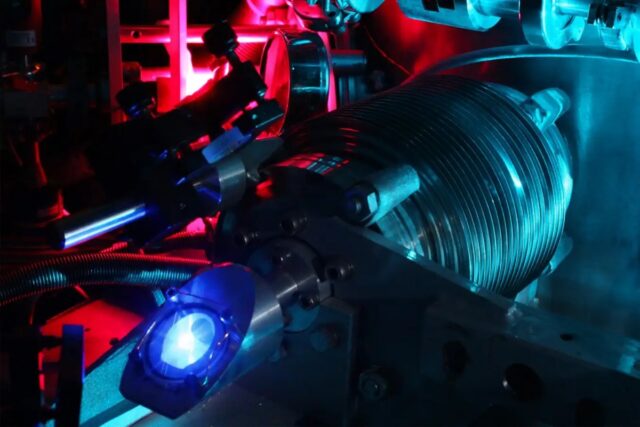
This brings us to the most recent research, encompassing two papers that involved experiments with hydrogen atoms housed in a vacuum chamber. By employing lasers to manipulate electrons and measuring energy transitions, researchers inferred the precise dimensions of the proton’s charge radius. The combined results indicated that the proton has a radius of approximately 0.84 femtometers, reaffirming the 2010 measurement that instigated this inquiry.
Juan Rojo, a physicist at Vrije University Amsterdam, noted the significance of these findings, stating that the proton radius should yield a consistent result across different methods. He highlighted how these two papers offered unique perspectives that converged on the same numerical value.
Test Your Understanding
How much do you know?