Tuesday, April 28, 2026

Scientists Develop New Refrigeration Method

Ionocaloric cooling is a new technology that could change how we cool things. It might replace current methods with an approach that is safer and better for the environment.

Traditional refrigerators use a fluid to move heat away by turning it into gas, then back into liquid. However, some refrigerants harm the environment.

In 2023, researchers from Lawrence Berkeley National Laboratory and the University of California, Berkeley, developed a new method. It uses how energy is stored or released when a material changes phase, such as ice melting into water.

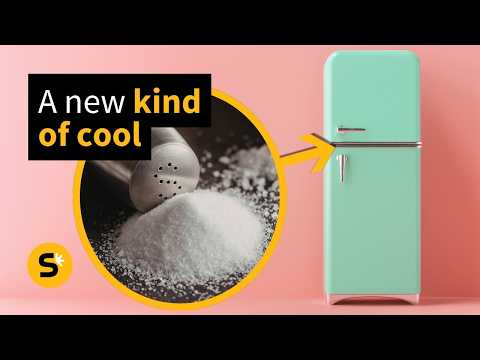
This technique uses ions, which are charged particles, to make ice melt without heating it. When ice melts, it absorbs heat and cools its surroundings. The ionocaloric cycle uses salt to cause this change and cool things down.

According to mechanical engineer Drew Lilley, finding a refrigerant that is efficient, safe, and eco-friendly is an unsolved problem. He believes ionocaloric cooling could meet these goals. A small electric current helps move ions, changing the material’s melting point and causing a temperature change.

Experiments with salt and a common solvent showed a temperature drop of 25 °C with less than one volt of charge. This is more effective than other cooling methods.

Countries that signed the Kigali Amendment aim to reduce harmful gases, and ionocaloric cooling could help this goal. Now, researchers are working to make the technology usable in everyday systems. Different salts are being tested to find the best combinations for heat removal. Results of these studies were published in the journal Science.

Test Your Understanding

Start Quiz

Vocabulary List:
6 words · tap to reveal
ON

Accent

Ionocaloric/aɪ.oʊ.nəˈkæl.ərɪk/adjective
Relating to cooling produced by ions that change a material’s heat storage during a phase change.

Refrigerant/rɪˈfrɪdʒərənt/noun
A substance used in cooling systems that absorbs and releases heat as it evaporates and condenses.

Phase/feɪz/noun
A distinct physical state of matter (solid liquid or gas); often used with "phase change" like melting or freezing.

Ions/ˈaɪ.ənz/noun
Atoms or molecules that carry an electric charge because they have gained or lost electrons.

Solvent/ˈsɒlvənt/noun
A liquid that dissolves another substance (a solute) to form a solution; in the article the liquid mixed with salt.

Melting point/ˈmɛltɪŋ pɔɪnt/noun
The temperature at which a solid turns into a liquid.

How much do you know?

What technology could change how we cool things?
Electrocaloric cooling
Ionocaloric cooling
Thermal cooling
Magnetocaloric cooling
Which research institutions developed the ionocaloric cooling method?
Harvard University and MIT
Stanford University and UC Santa Barbara
Lawrence Berkeley National Laboratory and the University of California, Berkeley
California Institute of Technology and Stanford University
What is used to make ice melt in the ionocaloric cooling technique?
Electricity
Water
Ions
Gas
How much did the temperature drop in experiments with salt?
10 °C
20 °C
25 °C
30 °C
What is the main disadvantage of traditional refrigerators?
They are too expensive
They require too much electricity
Some refrigerants harm the environment
They do not cool effectively
What is the goal of the Kigali Amendment?
To promote ionocaloric cooling
To reduce harmful gases
To improve energy efficiency
To increase refrigeration capacity
Ionocaloric cooling replaces traditional cooling methods entirely.
The ionocaloric cycle causes a material to change its melting point.
Drew Lilley believes that finding an eco-friendly refrigerant is a solved problem.
Ionocaloric cooling does not require any electric current.
The results of the ionocaloric cooling studies were published in the journal Science.
Countries that signed the Kigali Amendment aim to increase harmful gas emissions.
Ionocaloric cooling could replace current methods with an approach that is safer and better for the .
Traditional refrigerators turn gas back into to move heat away.
This technique uses to make ice melt without heating it.
Experiments showed a temperature drop of °C with less than one volt of charge.
Researchers are testing different to find the best combinations for heat removal.
The ionocaloric cycle helps in the process of and cooling down.
This question is required

Test Your Understanding

Start Quiz
Vocabulary List:
6 words · tap to reveal
ON
Accent
Ionocaloric/aɪ.oʊ.nəˈkæl.ərɪk/adjective
Relating to cooling produced by ions that change a material’s heat storage during a phase change.
Refrigerant/rɪˈfrɪdʒərənt/noun
A substance used in cooling systems that absorbs and releases heat as it evaporates and condenses.
Phase/feɪz/noun
A distinct physical state of matter (solid liquid or gas); often used with "phase change" like melting or freezing.
Ions/ˈaɪ.ənz/noun
Atoms or molecules that carry an electric charge because they have gained or lost electrons.
Solvent/ˈsɒlvənt/noun
A liquid that dissolves another substance (a solute) to form a solution; in the article the liquid mixed with salt.
Melting point/ˈmɛltɪŋ pɔɪnt/noun
The temperature at which a solid turns into a liquid.


How much do you know?

What technology could change how we cool things?
Electrocaloric cooling
Ionocaloric cooling
Thermal cooling
Magnetocaloric cooling
Which research institutions developed the ionocaloric cooling method?
Harvard University and MIT
Stanford University and UC Santa Barbara
Lawrence Berkeley National Laboratory and the University of California, Berkeley
California Institute of Technology and Stanford University
What is used to make ice melt in the ionocaloric cooling technique?
Electricity
Water
Ions
Gas
How much did the temperature drop in experiments with salt?
10 °C
20 °C
25 °C
30 °C
What is the main disadvantage of traditional refrigerators?
They are too expensive
They require too much electricity
Some refrigerants harm the environment
They do not cool effectively
What is the goal of the Kigali Amendment?
To promote ionocaloric cooling
To reduce harmful gases
To improve energy efficiency
To increase refrigeration capacity
Ionocaloric cooling replaces traditional cooling methods entirely.
The ionocaloric cycle causes a material to change its melting point.
Drew Lilley believes that finding an eco-friendly refrigerant is a solved problem.
Ionocaloric cooling does not require any electric current.
The results of the ionocaloric cooling studies were published in the journal Science.
Countries that signed the Kigali Amendment aim to increase harmful gas emissions.
Ionocaloric cooling could replace current methods with an approach that is safer and better for the .
Traditional refrigerators turn gas back into to move heat away.
This technique uses to make ice melt without heating it.
Experiments showed a temperature drop of °C with less than one volt of charge.
Researchers are testing different to find the best combinations for heat removal.
The ionocaloric cycle helps in the process of and cooling down.
This question is required

Read More