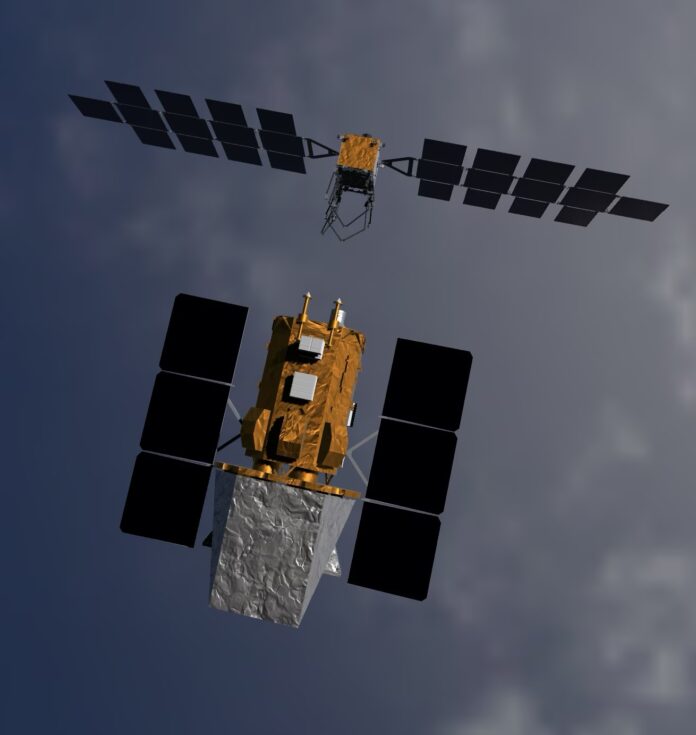
The Swift spacecraft is on a collision course with Earth and could crash before the year’s end unless it receives a reboost. Katalyst Space Technologies aims to address this issue with its robotic servicing spacecraft, Link, which will attempt to dock with Swift and raise its altitude, potentially extending the satellite’s operational life.
This project marks several significant firsts. Firstly, Swift was not originally designed for docking or altitude adjustments. Secondly, this mission represents the inaugural attempt by Katalyst to engage another satellite in orbit. Furthermore, NASA has imposed a strict nine-month timeline to construct, test, and launch the rescue operation before Swift descends below a threshold deemed safe for intervention.
Ghonhee Lee, the founder and CEO of Katalyst, called the mission “technically ambitious”. The launch is slated for June 1, leaving little room for error. By late summer or early autumn, Swift is expected to descend below 200 miles (320 kilometres), a point at which Katalyst may struggle to maintain control of its spacecraft. Lee acknowledged that the complexity of docking two large spacecraft adds significant challenges, noting that they initially believed they had more time.
NASA’s objectives for the mission are twofold: to showcase a critical capability for future space exploration and to prevent Swift from being destroyed upon re-entry while allowing it to continue its scientific work. Lee also mentioned the inherent uncertainty in such endeavors, stating, “You can’t get 100 percent guaranteed success on this.”
During a recent visit to Katalyst, technicians were actively engaged in assembling components, including solar panels, which contrasts sharply with the lengthy timelines typical of traditional government space missions. A company official remarked on the ambitious pace, saying that significant progress had been made given the project commenced only five months ago. The success of this mission could redefine how future satellite servicing is conducted in space.
Test Your Understanding
How much do you know?