Friday, June 26, 2026

All Known Homo Naledi Specimens Identified as Female

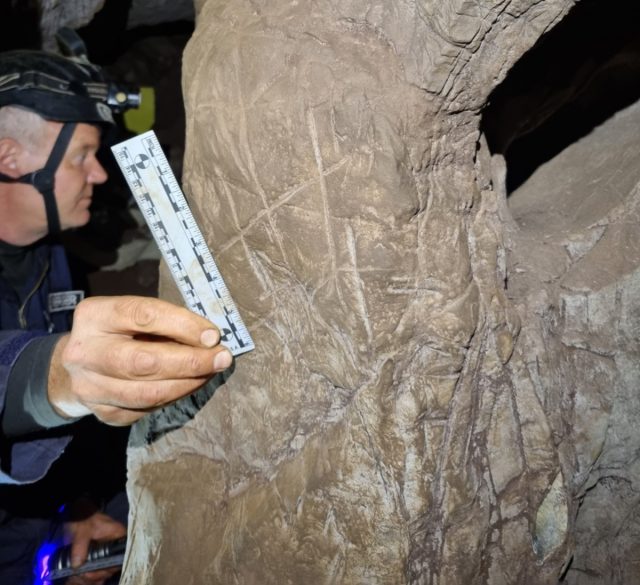
The idea that early human ancestors, known as hominins, had culture is gaining support. This change is largely due to findings related to Neanderthals and recent discoveries about Homo naledi. Researchers at the Rising Star cave site have found evidence suggesting that Homo naledi used fire and created engravings on stone. These details were shared in a paper by Lee Berger and his colleagues in 2023.

Berger reflected on the engravings, noting that they were likely not created for modern humans but perhaps for their descendants or for some other purpose. This raises important questions about the communication and intentions of these ancient beings.

Berger emphasised that Homo naledi represents a distinct species with differing cognitive abilities. Unlike Neanderthals, who were very similar to modern humans, Homo naledi displays unique traits that inspire new discussions about non-human intelligence and culture.

In response to their findings, Berger and his team have temporarily halted their excavations to consider the ethical implications of disturbing the remains of this intelligent yet non-human species. He urges scientists to approach these excavations with a sense of respect and responsibility. Berger views this situation as a significant moment in understanding our past, comparing it to a scenario from the science fiction show Star Trek.

Moving forward, the team will focus on further excavations and laboratory analysis to learn more about Homo naledi and their cultural practices.


Test Your Understanding

Start Quiz

Vocabulary List:
6 words · tap to reveal
ON

Accent

hominins/ˈhɑmənɪnz/noun
early human-like species from long ago

engravings/ɪnˈɡreɪvɪŋz/noun
pictures or marks cut into hard material

cognitive/ˈkɑɡnətɪv/adjective
related to thinking, learning, and understanding

excavations/ˌɛkskəˈveɪʃənz/noun
places where people dig to find things

ethical/ˈɛθɪkəl/adjective
ideas about right and wrong behavior

intentions/ɪnˈtɛnʃənz/noun
plans or aims behind someone's actions

How much do you know?

What technique did researchers find evidence of <em>Homo naledi</em> using?
Pottery
Fire
Stone tools
Textiles
In what year was the paper regarding <em>Homo naledi</em> published?
2020
2021
2022
2023
Who is the lead researcher mentioned in the findings about <em>Homo naledi</em>?
Jane Goodall
Richard Leakey
Lee Berger
Louis Leakey
Which species is noted for being very similar to modern humans?
Homo naledi
Neanderthals
Australopithecus
Homo erectus
What ethical considerations does Berger suggest regarding excavations?
Speed of excavation
Cost of excavation
Respect for remains
Public interest
What aspect of <em>Homo naledi</em> is emphasized by Berger?
Economic systems
Cognitive abilities
Physical strength
Reproductive habits
<em>Homo naledi</em> is considered to be a modern human ancestor.
Berger and his team have decided to continue excavations without pause.
The engravings found by <em>Homo naledi</em> were likely made for modern humans.
Berger views the excavation of <em>Homo naledi</em> remains as a significant moment in understanding the past.
Berger believes that <em>Homo naledi</em> exhibited unique traits compared to Neanderthals.
The Rising Star cave site is associated with recently discovered artifacts from <em>Homo naledi</em>.
<em>Homo naledi</em> used and created engravings on stone.
Berger noted that the engravings were likely not created for .
<em>Homo naledi</em> represents a distinct species with differing cognitive .
The team will focus on further excavations and analysis.
Berger compares this situation to a scenario from the science fiction show .
The findings related to <em>Homo naledi</em> raise questions about their and intentions.
This question is required

Test Your Understanding

Start Quiz
Vocabulary List:
6 words · tap to reveal
ON
Accent
hominins/ˈhɑmənɪnz/noun
early human-like species from long ago
engravings/ɪnˈɡreɪvɪŋz/noun
pictures or marks cut into hard material
cognitive/ˈkɑɡnətɪv/adjective
related to thinking, learning, and understanding
excavations/ˌɛkskəˈveɪʃənz/noun
places where people dig to find things
ethical/ˈɛθɪkəl/adjective
ideas about right and wrong behavior
intentions/ɪnˈtɛnʃənz/noun
plans or aims behind someone's actions

How much do you know?

What technique did researchers find evidence of <em>Homo naledi</em> using?
Pottery
Fire
Stone tools
Textiles
In what year was the paper regarding <em>Homo naledi</em> published?
2020
2021
2022
2023
Who is the lead researcher mentioned in the findings about <em>Homo naledi</em>?
Jane Goodall
Richard Leakey
Lee Berger
Louis Leakey
Which species is noted for being very similar to modern humans?
Homo naledi
Neanderthals
Australopithecus
Homo erectus
What ethical considerations does Berger suggest regarding excavations?
Speed of excavation
Cost of excavation
Respect for remains
Public interest
What aspect of <em>Homo naledi</em> is emphasized by Berger?
Economic systems
Cognitive abilities
Physical strength
Reproductive habits
<em>Homo naledi</em> is considered to be a modern human ancestor.
Berger and his team have decided to continue excavations without pause.
The engravings found by <em>Homo naledi</em> were likely made for modern humans.
Berger views the excavation of <em>Homo naledi</em> remains as a significant moment in understanding the past.
Berger believes that <em>Homo naledi</em> exhibited unique traits compared to Neanderthals.
The Rising Star cave site is associated with recently discovered artifacts from <em>Homo naledi</em>.
<em>Homo naledi</em> used and created engravings on stone.
Berger noted that the engravings were likely not created for .
<em>Homo naledi</em> represents a distinct species with differing cognitive .
The team will focus on further excavations and analysis.
Berger compares this situation to a scenario from the science fiction show .
The findings related to <em>Homo naledi</em> raise questions about their and intentions.
This question is required

Read More