Warning: foreach() argument must be of type array|object, false given in /home/u750883576/domains/esl-news.com/public_html/wp-content/plugins/gpt-post-quiz/includes/admin/class-gpoq-admin-4.php on line 450
Warning: foreach() argument must be of type array|object, false given in /home/u750883576/domains/esl-news.com/public_html/wp-content/plugins/td-composer/legacy/common/wp_booster/td_menu.php on line 88
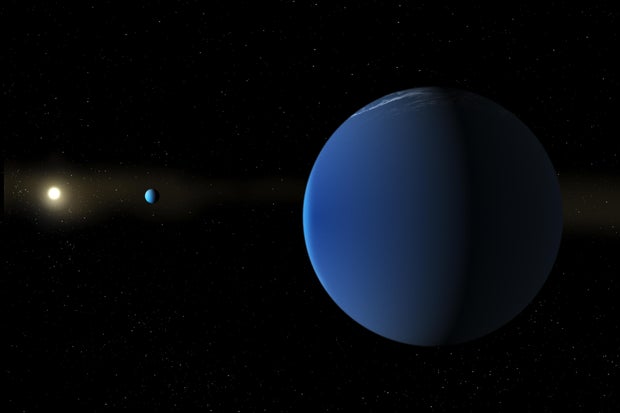
Astronomers have discovered two giant planets that are lighter than cotton candy. These planets are the largest ones found with less density than this sweet treat. They orbit a star 1,110 light-years away from Earth. George Dransfield from the University of Oxford says that these planets are the lightest of their size.
The planets are likely white or blue, depending on the clouds in their atmosphere. They probably consist mostly of hydrogen and helium, but scientists need more observations from NASA’s Webb Space Telescope to confirm this. The discovery comes from NASA’s TESS satellite, which has been observing these planets for the past ten years.
One of these planets takes 139 days to orbit its star, and the other takes 232 days. These planets are rare because they form from gas and dust around a young star. They lose much of their material over time.
Dransfield notes that studying these unusual planets can help scientists understand how giant planets form. Currently, NASA has confirmed nearly 6,300 planets outside our solar system, but fewer than 40 are super-puffs like these new discoveries.
Test Your Understanding
Start Quiz
Vocabulary List:
6 words · tap to reveal
ON
Accent
density/ˈdɛnsəti/noun
how heavy something is for its size
atmosphere/ˈæt.mə.sfɪr/noun
the layer of gases around a planet
orbit/ˈɔr.bɪt/verb
to move around a larger object
confirm/kənˈfɝm/verb
to show that something is true
observations/ˌɑb.zɚˈveɪ.ʃənz/noun
things scientists record when they watch something