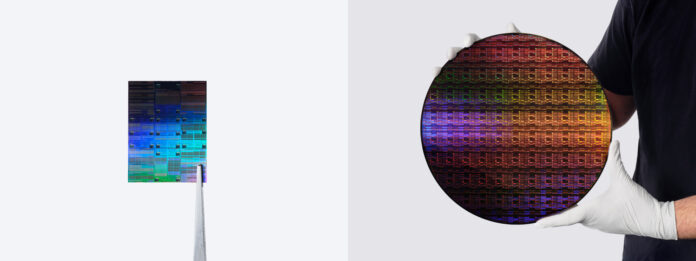
IBM has introduced the world’s first sub-1 nanometer (nm) chip, featuring an innovative transistor architecture characterised by a 0.7 nm node. This development arrives at a critical juncture for the semiconductor industry, which confronts the physical limitations of traditional chip scaling. Semiconductors are essential components in numerous applications, including computing, appliances, communication devices, transportation systems, and vital infrastructure.
The new chip integrates nearly 100 billion transistors into an area comparable to a fingernail, demonstrating almost double the density of IBM’s previous 2 nm chip released in 2021. Enhanced by structural and material innovations, such as the novel three-dimensional nanostack architecture, the new technology promises substantial advancements in performance and efficiency, despite nearing atomic dimensions. Projections indicate that it will deliver up to 50% more performance and 70% enhanced energy efficiency compared to IBM’s 2 nm chips, effectively improving capabilities for applications ranging from generative AI to cloud computing.
The nanostack architecture represents a significant advancement beyond existing nanosheet technology. By vertically stacking and staggering transistors, this design allows for the integration of varied materials within each layer, optimising the power and performance of individual transistors.
Validated by detailed experimental results, the new technology can be implemented practically. In demonstrations, it proved capable of significantly improving SRAM scaling, supporting the high data demands of advanced AI functionalities. This milestone enables the semiconductor industry to enter an era of angstrom-level scaling, pushing dimensions to sizes close to individual atoms.
Drawing on decades of innovation, IBM continues to lead in semiconductor research and development. The company collaborates with partners at a semiconductor research facility in Albany, New York, where advancements in lithography tools will facilitate the creation of smaller, more powerful chips. IBM anticipates that the first applications of nanostack technology could materialise within the next five years.