Friday, June 26, 2026

Astronomers Discover Two Massive Planets Lighter than Cotton Candy

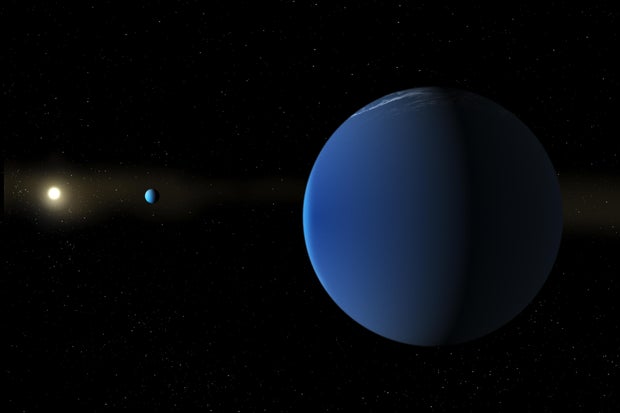
Astronomers have discovered two giant planets that are lighter than cotton candy. These planets are the size of Jupiter and orbit a star 1,110 light-years away. Their low density makes them the lightest known planets of their size, according to George Dransfield from the University of Oxford.

Dransfield explained that the densities of these planets are similar to shaving foam. She believes these planets might appear white or blue, depending on whether their skies are cloudy, and are mostly made of hydrogen and helium. To confirm their exact chemical makeup, researchers will need to use NASA’s Webb Space Telescope.

The planets were detected by NASA’s TESS satellite over the last decade. They orbit a star in the southern constellation Volans, the flying fish. Using telescopes on Earth, the team calculated the density of the planets from 1,110 light-years away.

In 2024, researchers found another similar planet, which they called a “cosmic mystery.” By comparison, Jupiter is about 35 times denser than these new planets. The two newly found planets have long orbits, taking 139 and 232 days to circle their star.

Super-puffs, like these planets, are rare. They are thought to form from gas and dust around a newborn star. Studying these unusual planets helps scientists learn more about how giant planets, like Jupiter, form and our place in the universe. NASA has confirmed nearly 6,300 worlds outside our solar system, but fewer than 40 are super-puffs.


Test Your Understanding

Start Quiz

Vocabulary List:
6 words · tap to reveal
ON

Accent

density/ˈdɛnsəti/noun
how heavy something is for its size

orbit/ˈɔɹbɪt/verb
to move around a larger object in space

hydrogen/ˈhaɪdrədʒən/noun
a very light gas, main element in stars

helium/ˈhiːliəm/noun
a light gas used in balloons and stars

detected/dɪˈtɛktɪd/verb
found or discovered something, often with tools

constellation/ˌkɑnstəˈleɪʃən/noun
a group of stars forming a pattern in sky

How much do you know?

How far away are the newly discovered planets from Earth?
1,110 light-years
2,500 light-years
800 light-years
5,000 light-years
Which telescope will researchers use to confirm the chemical makeup of the new planets?
Hubble Space Telescope
James Webb Space Telescope
Chandra X-ray Observatory
Kepler Space Telescope
What is the average density comparison of the new planets to Jupiter?
Less than Jupiter
Equal to Jupiter
35 times denser than Jupiter
10 times denser than Jupiter
In which constellation is the star that the new planets orbit located?
Orion
Volans
Andromeda
Cassiopeia
What substance are the newly discovered planets primarily composed of?
Carbon and nitrogen
Oxygen and sulfur
Hydrogen and helium
Silicon and iron
How long does it take for one of the newly found planets to complete an orbit around its star?
139 days
232 days
365 days
100 days
The densities of the new planets are similar to shaving foam.
The planets have a high density, denser than Jupiter.
Super-puffs are considered common among newly discovered planets.
NASA's TESS satellite detected the new planets.
Researchers found the new planets in 2024.
There are fewer than 40 super-puffs confirmed by NASA.
The planets are similar in size to .
Researchers will use NASA's Webb Space Telescope to confirm their .
The two newly found planets require and to form.
The team calculated the density from light-years away.
By comparison, Jupiter is about 35 times than the new planets.
Studying these unusual planets helps scientists learn more about planets.
This question is required

Test Your Understanding

Start Quiz
Vocabulary List:
6 words · tap to reveal
ON
Accent
density/ˈdɛnsəti/noun
how heavy something is for its size
orbit/ˈɔɹbɪt/verb
to move around a larger object in space
hydrogen/ˈhaɪdrədʒən/noun
a very light gas, main element in stars
helium/ˈhiːliəm/noun
a light gas used in balloons and stars
detected/dɪˈtɛktɪd/verb
found or discovered something, often with tools
constellation/ˌkɑnstəˈleɪʃən/noun
a group of stars forming a pattern in sky

How much do you know?

How far away are the newly discovered planets from Earth?
1,110 light-years
2,500 light-years
800 light-years
5,000 light-years
Which telescope will researchers use to confirm the chemical makeup of the new planets?
Hubble Space Telescope
James Webb Space Telescope
Chandra X-ray Observatory
Kepler Space Telescope
What is the average density comparison of the new planets to Jupiter?
Less than Jupiter
Equal to Jupiter
35 times denser than Jupiter
10 times denser than Jupiter
In which constellation is the star that the new planets orbit located?
Orion
Volans
Andromeda
Cassiopeia
What substance are the newly discovered planets primarily composed of?
Carbon and nitrogen
Oxygen and sulfur
Hydrogen and helium
Silicon and iron
How long does it take for one of the newly found planets to complete an orbit around its star?
139 days
232 days
365 days
100 days
The densities of the new planets are similar to shaving foam.
The planets have a high density, denser than Jupiter.
Super-puffs are considered common among newly discovered planets.
NASA's TESS satellite detected the new planets.
Researchers found the new planets in 2024.
There are fewer than 40 super-puffs confirmed by NASA.
The planets are similar in size to .
Researchers will use NASA's Webb Space Telescope to confirm their .
The two newly found planets require and to form.
The team calculated the density from light-years away.
By comparison, Jupiter is about 35 times than the new planets.
Studying these unusual planets helps scientists learn more about planets.
This question is required

Read More