Friday, June 26, 2026

Astronomers Discover Two Gigantic Planets Lighter Than Cotton Candy

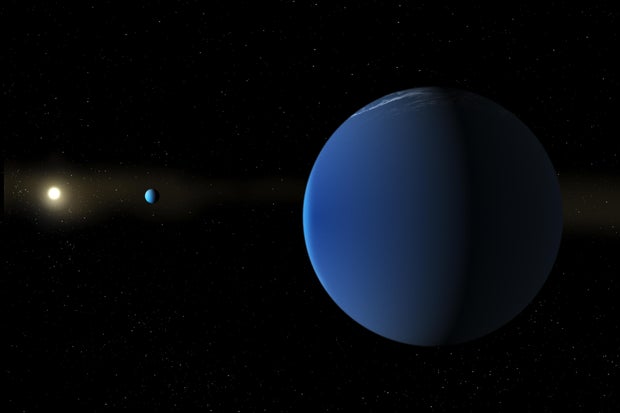
Astronomers found two giant planets that are lighter than cotton candy. They are both the size of Jupiter. These planets orbit a star 1,110 light-years from Earth.

This discovery is important because these planets have less density, which means they are very light for their size. George Dransfield from the University of Oxford said they are like a fluffy blob of shaving foam. The planets might be white or blue, depending on their clouds. They probably contain mostly hydrogen and helium, which are common gases.

The planets were detected by NASA’s Tess satellite over ten years. They orbit a star in the southern constellation called Volans. Scientists studied the planets’ orbits using telescopes to understand their density from far away.

NASA also notes that these planets have long orbits. One takes 139 days to circle the star, and the other takes 232 days. Super-puffs like these are rare in space. They can help scientists learn more about how planets form and where they belong in the universe.


Test Your Understanding

Start Quiz

Vocabulary List:
6 words · tap to reveal
ON

Accent

density/ˈdɛnsəti/noun
how heavy something is for its size

orbit/ˈɔrbɪt/verb
to move around a larger object in space

detected/dɪˈtɛktɪd/verb
found or noticed something that was hidden

satellite/ˈsætəˌlaɪt/noun
a machine that moves around a planet or star

telescopes/ˈtɛləˌskoʊps/noun
tools to look at far objects in space

hydrogen/ˈhaɪdrədʒən/noun
a very common gas in stars and planets

How much do you know?

How far is the star that the two giant planets orbit from Earth?
1,110 light-years
500 light-years
2,000 light-years
1,500 light-years
What is the size of the newly discovered planets compared to?
Earth
Neptune
Jupiter
Mars
Which organization detected the planets?
ESA
NASA
ISRO
JAXA
How many days does one of the planets take to orbit its star?
139 days
365 days
232 days
100 days
What gases are the planets likely made up of?
Oxygen and Nitrogen
Hydrogen and Helium
Carbon Dioxide and Argon
Methane and Ammonia
In which constellation are the planets located?
Orion
Volans
Andromeda
Ursa Major
The planets discovered are heavier than cotton candy.
The planets are mostly composed of hydrogen and helium.
One of the planets takes 139 days to orbit around its star.
The planets were detected by a ground-based telescope.
Super-puffs like these planets are common in space.
The density of the planets is high for their size.
The planets orbit a star that is light-years from Earth.
George Dransfield described the planets as being like a fluffy blob of foam.
One planet takes days to circle its star.
The planets might appear or blue, depending on their clouds.
NASA's Tess satellite took over years to detect the planets.
The two giant planets are the size of .
This question is required

Test Your Understanding

Start Quiz
Vocabulary List:
6 words · tap to reveal
ON
Accent
density/ˈdɛnsəti/noun
how heavy something is for its size
orbit/ˈɔrbɪt/verb
to move around a larger object in space
detected/dɪˈtɛktɪd/verb
found or noticed something that was hidden
satellite/ˈsætəˌlaɪt/noun
a machine that moves around a planet or star
telescopes/ˈtɛləˌskoʊps/noun
tools to look at far objects in space
hydrogen/ˈhaɪdrədʒən/noun
a very common gas in stars and planets

How much do you know?

How far is the star that the two giant planets orbit from Earth?
1,110 light-years
500 light-years
2,000 light-years
1,500 light-years
What is the size of the newly discovered planets compared to?
Earth
Neptune
Jupiter
Mars
Which organization detected the planets?
ESA
NASA
ISRO
JAXA
How many days does one of the planets take to orbit its star?
139 days
365 days
232 days
100 days
What gases are the planets likely made up of?
Oxygen and Nitrogen
Hydrogen and Helium
Carbon Dioxide and Argon
Methane and Ammonia
In which constellation are the planets located?
Orion
Volans
Andromeda
Ursa Major
The planets discovered are heavier than cotton candy.
The planets are mostly composed of hydrogen and helium.
One of the planets takes 139 days to orbit around its star.
The planets were detected by a ground-based telescope.
Super-puffs like these planets are common in space.
The density of the planets is high for their size.
The planets orbit a star that is light-years from Earth.
George Dransfield described the planets as being like a fluffy blob of foam.
One planet takes days to circle its star.
The planets might appear or blue, depending on their clouds.
NASA's Tess satellite took over years to detect the planets.
The two giant planets are the size of .
This question is required

Read More