

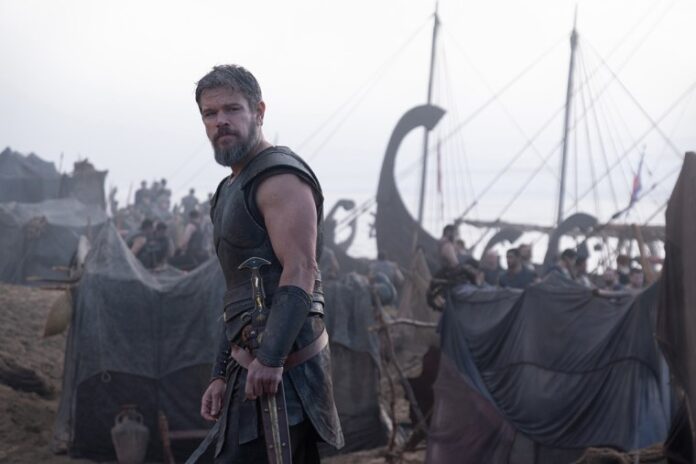
Christopher Nolan’s adaptation of “The Odyssey” has sparked extensive dialogue prior to its release, drawing attention to the ancient tale of a soldier’s arduous journey home after the Trojan War, a narrative attributed to the poet Homer some 3,000 years ago. The film’s relevance endures, as scholars analyse its fidelity to the original epic.
Among the critics, Homeric scholars offer valuable insights regarding the film’s interpretation. Emily Wilson, a classics professor at the University of Pennsylvania and translator of a recent edition of “The Odyssey,” remarked that Nolan’s adaptation attempts to encompass numerous elements while overlooking critical themes inherent to the original poem. She expressed concern that Penelope’s character was diminished, undermining the credibility of her relationship with Odysseus.
Academics Joel Christensen of CUNY Graduate Center and Emily Austin from the University of Chicago viewed the film shortly after its release. Their reactions diverged; while Austin praised its execution, Christensen noted shortcomings. He highlighted that Matt Damon’s portrayal of Odysseus lacked the complexity depicted in the source material, presenting a character more conventionally virtuous than ambiguous.
Despite these critiques, both scholars commended the film’s narrative structure, which interleaves present events with flashbacks. Christensen acknowledged this approach as effective for audiences unfamiliar with the story. Austin appreciated how the film captures the challenges of reintegration faced by Odysseus upon returning home.
Nolan’s alteration of the story’s ending was particularly noteworthy. Unlike Homer’s abrupt conclusion leading to further conflict, the film ends on a more optimistic note, depicting Odysseus and Penelope in self-imposed exile, safeguarding their son from the cycle of violence.
Moving forward, further discourse is anticipated as audiences and critics continue to explore the nuances and implications of Nolan’s interpretation.


