

Thursday, July 23, 2026

Experts Warn SpaceX IPO Could Exploit Retail Investors

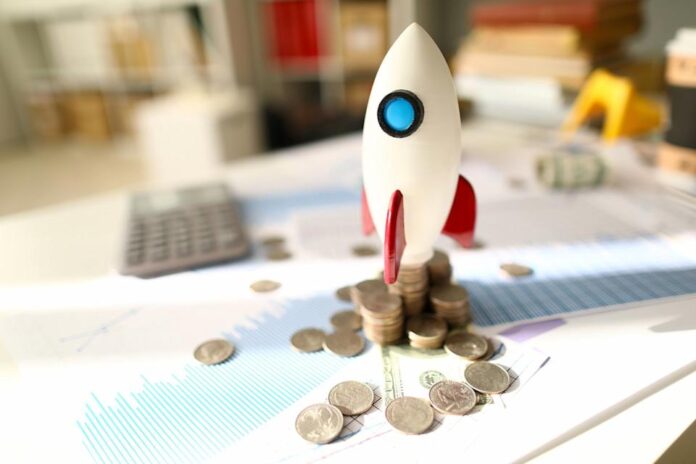
The anticipated initial public offering (IPO) of SpaceX on June 12 is capturing significant attention in financial circles. If successful, it could surpass Saudi Aramco’s record-setting $29.4 billion IPO from 2019 and achieve a valuation of at least $1.8 trillion.

Elon Musk’s company, renowned for its advancements in space technology and artificial intelligence (AI), aims to raise $75 billion through this offering. While large language model companies like Anthropic and OpenAI strive for valuations nearing $1 trillion, SpaceX’s potential debut poses both excitement and concern among investors.

Despite the excitement, experts express skepticism about the IPO’s viability. SpaceX’s operational losses, capital-intensive model, and lacklustre growth in its AI division raise red flags. Historically, megasized IPOs often face a rocky start; many see a decline in share price within the six months following their debut. For instance, Facebook (now Meta Platforms) experienced a 38% drop during this period after its IPO.

Moreover, the IPO’s valuation poses a significant issue. Analysts note that the price-to-sales (P/S) ratio could reach 96 if the company is valued at $1.8 trillion, far exceeding sustainable levels observed in successful tech companies. This suggests a possible overvaluation, or “bubble,” which may lead to substantial losses for investors in the long run.

Structural changes by Nasdaq to facilitate SpaceX’s inclusion in stock indices may also disadvantage retail investors. The new rules allow SpaceX to be added to major equity indices more swiftly, resulting in forced buying from passive funds. However, this may lead to a situation where insiders, who control most shares and can begin selling shortly after the IPO, benefit disproportionately, possibly leaving everyday investors at a disadvantage.

As the IPO date approaches, potential investors must carefully evaluate the associated risks against the promise of potentially high returns.

Test Your Understanding

Start Quiz

Vocabulary List:
6 words · tap to reveal
ON

Accent

valuation/ˌvæljuˈeɪʃən/noun
the money value of a company or asset

surpass/sɚˈpæs/verb
to be greater in amount or degree

skepticism/ˈskɛptɪˌsɪzəm/noun
doubt about whether something is true or good

viability/ˌvaɪəˈbɪlɪti/noun
ability to work well or succeed

bubble/ˈbʌbəl/noun
a time when prices are much higher than normal

insiders/ɪnˈsaɪdərz/noun
people within a company who have special information

How much do you know?

What is the anticipated date for SpaceX's IPO?
June 12
July 4
August 15
September 1
How much does SpaceX aim to raise through its IPO?
$50 billion
$75 billion
$100 billion
$29.4 billion
What is the potential valuation SpaceX could achieve if the IPO is successful?
$1 trillion
$1.5 trillion
$1.8 trillion
$2 trillion
Which company did the record-setting IPO in 2019?
Facebook
Amazon
Saudi Aramco
SpaceX
What price-to-sales (P/S) ratio could SpaceX reach if valued at $1.8 trillion?
45
60
80
96
Which company experienced a 38% drop in share price after its IPO?
SpaceX
Meta Platforms
Google
Amazon
SpaceX's IPO is expected to be less than $29.4 billion.
Experts are unanimously supportive of the IPO's potential success.
The new Nasdaq rules will make it harder for SpaceX to join major equity indices.
SpaceX is known for its advancements in space technology and artificial intelligence.
Investors are fully confident that SpaceX will not face a decline in share price post-IPO.
SpaceX is aiming for a valuation of at least $1.8 trillion through its IPO.
The IPO of SpaceX is set to take place on June 12 and aims to raise billion.
SpaceX could achieve a valuation of at least trillion if the IPO is successful.
After its IPO, Facebook experienced a percent drop in share price within six months.
Analysts are concerned about a possible in SpaceX's valuation.
Many experts express skepticism about the IPO's due to operational losses.
The new Nasdaq rules may disadvantage investors regarding SpaceX's shares.
This question is required

Test Your Understanding

Start Quiz
Vocabulary List:
6 words · tap to reveal
ON
Accent
valuation/ˌvæljuˈeɪʃən/noun
the money value of a company or asset
surpass/sɚˈpæs/verb
to be greater in amount or degree
skepticism/ˈskɛptɪˌsɪzəm/noun
doubt about whether something is true or good
viability/ˌvaɪəˈbɪlɪti/noun
ability to work well or succeed
bubble/ˈbʌbəl/noun
a time when prices are much higher than normal
insiders/ɪnˈsaɪdərz/noun
people within a company who have special information

How much do you know?

What is the anticipated date for SpaceX's IPO?
June 12
July 4
August 15
September 1
How much does SpaceX aim to raise through its IPO?
$50 billion
$75 billion
$100 billion
$29.4 billion
What is the potential valuation SpaceX could achieve if the IPO is successful?
$1 trillion
$1.5 trillion
$1.8 trillion
$2 trillion
Which company did the record-setting IPO in 2019?
Facebook
Amazon
Saudi Aramco
SpaceX
What price-to-sales (P/S) ratio could SpaceX reach if valued at $1.8 trillion?
45
60
80
96
Which company experienced a 38% drop in share price after its IPO?
SpaceX
Meta Platforms
Google
Amazon
SpaceX's IPO is expected to be less than $29.4 billion.
Experts are unanimously supportive of the IPO's potential success.
The new Nasdaq rules will make it harder for SpaceX to join major equity indices.
SpaceX is known for its advancements in space technology and artificial intelligence.
Investors are fully confident that SpaceX will not face a decline in share price post-IPO.
SpaceX is aiming for a valuation of at least $1.8 trillion through its IPO.
The IPO of SpaceX is set to take place on June 12 and aims to raise billion.
SpaceX could achieve a valuation of at least trillion if the IPO is successful.
After its IPO, Facebook experienced a percent drop in share price within six months.
Analysts are concerned about a possible in SpaceX's valuation.
Many experts express skepticism about the IPO's due to operational losses.
The new Nasdaq rules may disadvantage investors regarding SpaceX's shares.
This question is required

Read More


