Poppe stated that increasing the grid’s capacity by one gigawatt could reduce customer rates by one per cent. He also suggested that artificial intelligence (AI) could enhance the company’s efficiency with existing resources. By implementing a new operational strategy that incorporates AI for simultaneous engineering, the firm aims to improve grid placement and utilisation, ensuring that resources are allocated effectively for the lowest possible costs.
The success of this approach for PG&E customers remains uncertain, as the practical implications of Poppe’s vision have yet to be fully realised.
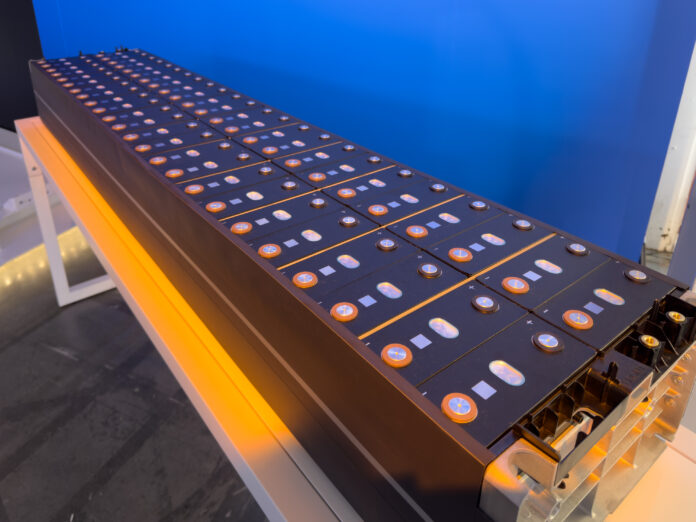
In parallel, General Motors (GM) acknowledged the significance of developing vehicle-to-grid (V2G) support within its product range. However, the company emphasised that battery storage technology is essential for providing consistent support to the power grid. To this end, GM revealed plans to introduce sodium-ion batteries specifically designed for Energy Storage Systems (ESS), which are crucial for reinforcing the electrical grid.
These sodium-ion batteries differ from electric vehicle (EV) traction batteries, which are designed for performance and lightweight characteristics. In contrast, ESS batteries prioritise longevity and cost-effectiveness. Kurt Kelty, GM’s vice president of battery and sustainability, articulated the company’s strategy: to create tailored batteries for distinct applications.
GM is collaborating with Peak Energy to develop sodium pyrophosphate (NFPP) batteries, which should reduce maintenance costs by 20 per cent compared to current ESS options. This next-generation battery is anticipated to enter production in 2028. Although GM has not disclosed manufacturing costs or energy density targets, it highlighted the broader operational temperature range of its sodium-ion batteries, suggesting they could endure between -40 °C and 60 °C. The company aims for these batteries to achieve between 10,000 and 20,000 cycles, surpassing traditional lithium iron phosphate (LFP) batteries.
Test Your Understanding
How much do you know?