Elon Musk has achieved the status of the world’s first trillionaire, largely due to significant support from various sectors, notably American taxpayers and governmental initiatives. His companies, notably SpaceX and Tesla, benefited immensely from financial backing at critical junctures in their development.
Ross Gerber, CEO of Gerber Kawasaki, an investment firm and early Tesla backer, stated, “There would not be (Tesla and SpaceX) if it weren’t for the government.” Indeed, SpaceX secured over $500 million in grants during its formative years, and Tesla received substantial financial assistance through various means, including loans and government contracts.
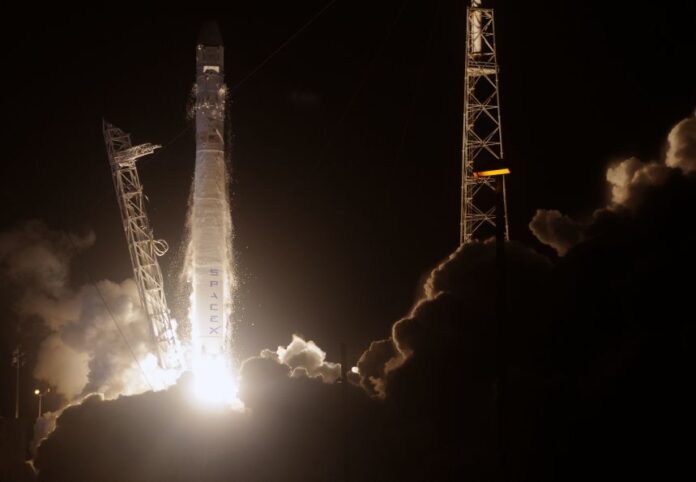
While the assertion that federal support solely enabled these companies’ success is overly simplistic, it is undeniable that both firms faced severe financial uncertainty before receiving taxpayer-funded subsidies. SpaceX, for instance, received a pivotal $278 million grant from NASA in 2006 to develop its Falcon rocket and Dragon spacecraft as the Space Shuttle programme was concluding.
This initial funding marked a substantial commitment from NASA, which helped alleviate SpaceX’s financial strain during its early stages. Consequently, while investors reaped significant rewards, government agencies have generally not shared in the financial benefits derived from these ventures.
NASA’s support for SpaceX extended beyond grants, providing a crucial $1.6 billion contract in 2008 that helped the company avert financial collapse. Musk has acknowledged that such backing was indispensable for SpaceX’s inception and growth.
Tesla similarly received a critical $465 million low-interest loan from the Department of Energy in 2010, facilitating the development of its Model S sedan. Both companies also benefited from incentives like tax credits intended to promote electric vehicle adoption.
As Tesla’s trajectory has shifted, the company’s financial ecosystem now relies less on direct government aid and more on speculative market confidence in Musk’s ambitious visions for future technologies. Nevertheless, critics suggest that the government missed an opportunity to negotiate an equity stake in these burgeoning enterprises, given their extensive use of public funds.
Test Your Understanding
How much do you know?