

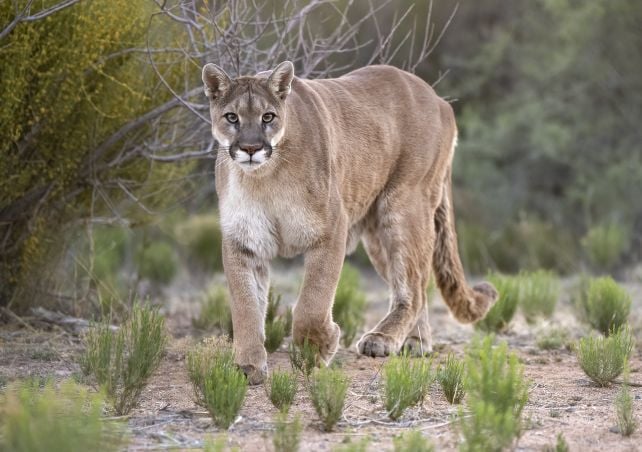
The wilderness of North America is home to formidable predators, including black and brown bears and mountain lions. Despite their strength, recent research reveals that these animals are more afraid of humans than previously thought. In fact, bear and mountain lion attacks on people are exceedingly rare, with a lower likelihood than being struck by lightning.
Bears in North America attack an average of around 11.4 humans yearly, while mountain lions are responsible for 4 to 6 attacks. For contrast, approximately 580 people are struck by lightning each year in the US and Canada. Researchers believe that these animals go to great lengths to avoid humans, changing their behaviours accordingly.
One study led by wildlife biologist Philip Manlick used motion-activated speakers to play different sounds near bears in Alaska. The bears showed a significant aversion to human voices, retreating almost ten times more often than when they heard other noises. This behaviour impacts the ecosystem, as bears play a role in fertilising forests with remnants from their feeding.
Similarly, a study of mountain lions in California found that they avoided areas of high human activity. The findings suggest that both bears and mountain lions perceive humans as a serious threat. As a result, they change their movements and habits to steer clear of encounters.
Moving forward, researchers suggest that humans should be mindful of their presence in these animals’ habitats, aiming for a coexistence that reduces conflict. This involves understanding how human behaviour influences wildlife and ecosystems.