Warning: foreach() argument must be of type array|object, false given in /home/u750883576/domains/esl-news.com/public_html/wp-content/plugins/gpt-post-quiz/includes/admin/class-gpoq-admin-4.php on line 450
Warning: foreach() argument must be of type array|object, false given in /home/u750883576/domains/esl-news.com/public_html/wp-content/plugins/td-composer/legacy/common/wp_booster/td_menu.php on line 88
Having regular, easy bowel movements is important for a good quality of life. However, up to 15% of people worldwide face difficulties because of chronic constipation. This condition has different types and causes.
One type is slow-transit constipation (STC), where food moves slowly through the digestive system. This can happen if the nerves controlling peristalsis—muscle movements that move food through the gut—are not working properly.
A study in the journal Frontiers in Immunology says STC might be linked to problems with the gut-brain axis, affecting mood and brain health. This link involves the gut microbiota (tiny organisms in the gut), the gut’s lining, and the enteric nervous system, which helps control digestion.
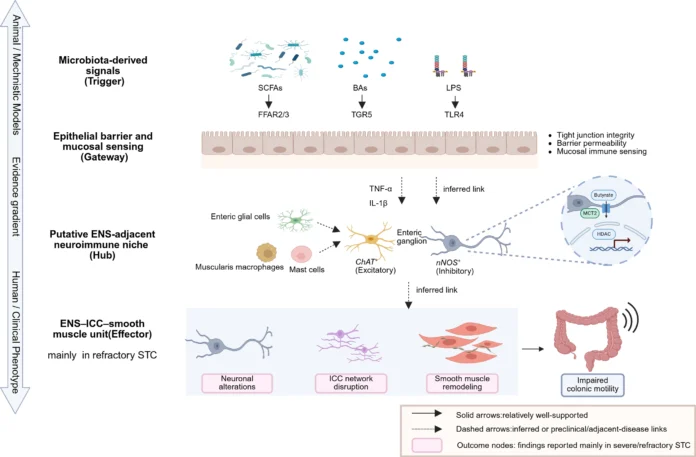
Researchers suggest a model called "Trigger–Gateway–Hub–Effector" to explain these interactions. The "Trigger" involves changes in gut bacteria due to diet or other factors. These changes can affect the gut lining, leading to inflammation and problems like irritable bowel syndrome (IBS).
The "Gateway" refers to the leaking gut lining, and the "Hub" includes local interactions affecting gut muscles. The "Effector" is the enteric nervous system, which can be disrupted, affecting bowel movements.
Future treatments might focus on restoring healthy bacteria, reducing inflammation, and protecting the gut’s nervous system. These may be combined with traditional laxatives to help those with constipation.
This research provides a better understanding of constipation and potential treatments. It was published in Frontiers in Immunology.
What percentage of people worldwide face difficulties due to chronic constipation?
5%
10%
15%
20%
Which type of constipation involves slow movement of food through the digestive system?
Obstructive constipation
Slow-transit constipation
Functional constipation
Idiopathic constipation
What is the journal that published the study about slow-transit constipation?
Nature
Frontiers in Immunology
The Lancet
Gastroenterology
What does the 'Trigger' in the model represent?
Leaking gut lining
Changes in gut bacteria
Gut-brain axis
Irritable bowel syndrome
What does the term 'Hub' refer to in the proposed model?
Change in gut flora
Local interactions affecting gut muscles
Dietary influences
Inflammation response
What may future treatments for constipation focus on?
Increasing fiber intake
Restoring healthy bacteria
Reducing fluid consumption
Enhancing emotional health
Up to 20% of people worldwide face difficulties due to chronic constipation.
Slow-transit constipation is caused by nerves not working properly.
The gut-brain axis has no connection to bowel health.
Irritable bowel syndrome can be a result of changes in gut bacteria.
The 'Gateway' in the model refers to the effects of healthy gut bacteria.
Future treatments may include traditional laxatives for constipation.
Having regular, easy bowel movements is important for a good quality of life, however, up to of people worldwide face difficulties due to chronic constipation.
One type of constipation is slow-transit constipation (STC), where food moves slowly through the system.
The 'Trigger' involves changes in gut bacteria due to diet or other .
Future treatments might focus on restoring healthy bacteria, reducing inflammation, and protecting the gut’s system.
The study suggests that STC might be linked to problems with the gut-brain .
This research provides a better understanding of constipation and potential .
What percentage of people worldwide face difficulties due to chronic constipation?
5%
10%
15%
20%
Which type of constipation involves slow movement of food through the digestive system?
Obstructive constipation
Slow-transit constipation
Functional constipation
Idiopathic constipation
What is the journal that published the study about slow-transit constipation?
Nature
Frontiers in Immunology
The Lancet
Gastroenterology
What does the 'Trigger' in the model represent?
Leaking gut lining
Changes in gut bacteria
Gut-brain axis
Irritable bowel syndrome
What does the term 'Hub' refer to in the proposed model?
Change in gut flora
Local interactions affecting gut muscles
Dietary influences
Inflammation response
What may future treatments for constipation focus on?
Increasing fiber intake
Restoring healthy bacteria
Reducing fluid consumption
Enhancing emotional health
Up to 20% of people worldwide face difficulties due to chronic constipation.
Slow-transit constipation is caused by nerves not working properly.
The gut-brain axis has no connection to bowel health.
Irritable bowel syndrome can be a result of changes in gut bacteria.
The 'Gateway' in the model refers to the effects of healthy gut bacteria.
Future treatments may include traditional laxatives for constipation.
Having regular, easy bowel movements is important for a good quality of life, however, up to of people worldwide face difficulties due to chronic constipation.
One type of constipation is slow-transit constipation (STC), where food moves slowly through the system.
The 'Trigger' involves changes in gut bacteria due to diet or other .
Future treatments might focus on restoring healthy bacteria, reducing inflammation, and protecting the gut’s system.
The study suggests that STC might be linked to problems with the gut-brain .
This research provides a better understanding of constipation and potential .