Warning: foreach() argument must be of type array|object, false given in /home/u750883576/domains/esl-news.com/public_html/wp-content/plugins/gpt-post-quiz/includes/admin/class-gpoq-admin-4.php on line 450
Warning: foreach() argument must be of type array|object, false given in /home/u750883576/domains/esl-news.com/public_html/wp-content/plugins/td-composer/legacy/common/wp_booster/td_menu.php on line 88
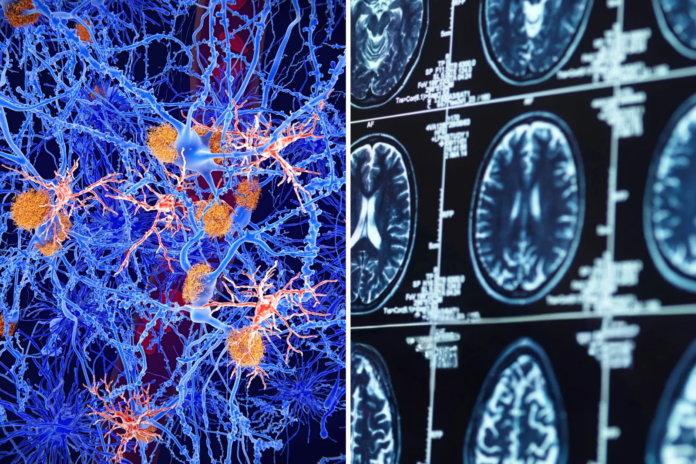
Researchers at the University of Utah Health have discovered how Alzheimer’s disease spreads in the brain. This finding could help develop new treatments that slow the disease instead of just removing harmful proteins after the damage is done.
The study showed that a brain protein called Arc helps nerve cells, or neurons, send messages. However, it also assists the spread of toxic Tau, a protein linked to Alzheimer’s. Arc carries Tau out of damaged neurons and into healthy ones, leading to more problems.
Dr. Christopher U. Missling, who leads a biotechnology company, explained that this research changes how scientists understand the disease. For years, they mainly looked at Tau building up inside neurons but did not fully consider how it spreads between cells.
The team compared mice with Alzheimer’s to those without the Arc protein. They found that removing Arc reduced the spread of Tau. While Arc helps neurons survive in early disease stages, simply blocking it may not be effective.
The researchers found Tau and Arc in human brain tissue, suggesting that the same process could happen in people. They warn that more studies are needed, but this discovery could open doors for future treatments aiming to slow Alzheimer’s.
Test Your Understanding
Start Quiz
How much do you know?
What brain protein assists in the spread of toxic Tau linked to Alzheimer’s?
Beta-amyloid
Arc
Tau itself
Neuronin
Who is the lead researcher mentioned in the study?
Dr. John Smith
Dr. Christopher U. Missling
Dr. Emily Zhang
Dr. Robert Lee
What did researchers find when they removed Arc from mice?
Increased spread of Tau
No change in Tau levels
Reduced spread of Tau
Complete removal of Tau
What is the primary focus of the new discovery regarding Alzheimer’s disease?
Removing harmful proteins
Understanding disease spread
Preventing brain cell death
Enhancing protein functions
What is the potential impact of the discovery made by the researchers?
Development of new treatments
Complete cure for Alzheimer's
Increased focus on protein removal
More severe symptoms of Alzheimer's
What type of cells do Arc and Tau primarily interact with?
Blood cells
Muscle cells
Neurons
Skin cells
The researchers found that Tau is only present in damaged neurons.
The study indicates that Arc has a dual role in both supporting neurons and spreading Tau.
Dr. Christopher U. Missling is associated with a technology company.
The research on Alzheimer’s was conducted on human brain tissue only.
Removing the Arc protein completely blocks the spread of Tau.
The study suggests that the same process of Tau spreading may occur in humans.
Researchers discovered how Alzheimer’s disease spreads in the brain, which could help develop new treatments that slow the disease instead of just removing harmful proteins after the damage is done. The brain protein called Arc helps neurons send messages but also assists the spread of toxic Tau, leading to more problems. Arc carries Tau out of damaged neurons and into healthy ones, leading to more problems.
Dr. Christopher U. Missling explained that this research alters how scientists understand the disease, which has been mainly viewed in terms of Tau building up neurons.
The researchers found Tau and Arc in human brain tissue, suggesting that the same process could happen in .
While Arc helps neurons survive in early disease stages, simply blocking it may not be effective.
The team compared mice with Alzheimer's to those without the Arc protein, finding that removing Arc resulted in reduced spread of .
The discovery could open doors for future treatments aiming to Alzheimer’s.
What brain protein assists in the spread of toxic Tau linked to Alzheimer’s?
Beta-amyloid
Arc
Tau itself
Neuronin
Who is the lead researcher mentioned in the study?
Dr. John Smith
Dr. Christopher U. Missling
Dr. Emily Zhang
Dr. Robert Lee
What did researchers find when they removed Arc from mice?
Increased spread of Tau
No change in Tau levels
Reduced spread of Tau
Complete removal of Tau
What is the primary focus of the new discovery regarding Alzheimer’s disease?
Removing harmful proteins
Understanding disease spread
Preventing brain cell death
Enhancing protein functions
What is the potential impact of the discovery made by the researchers?
Development of new treatments
Complete cure for Alzheimer's
Increased focus on protein removal
More severe symptoms of Alzheimer's
What type of cells do Arc and Tau primarily interact with?
Blood cells
Muscle cells
Neurons
Skin cells
The researchers found that Tau is only present in damaged neurons.
The study indicates that Arc has a dual role in both supporting neurons and spreading Tau.
Dr. Christopher U. Missling is associated with a technology company.
The research on Alzheimer’s was conducted on human brain tissue only.
Removing the Arc protein completely blocks the spread of Tau.
The study suggests that the same process of Tau spreading may occur in humans.
Researchers discovered how Alzheimer’s disease spreads in the brain, which could help develop new treatments that slow the disease instead of just removing harmful proteins after the damage is done. The brain protein called Arc helps neurons send messages but also assists the spread of toxic Tau, leading to more problems. Arc carries Tau out of damaged neurons and into healthy ones, leading to more problems.
Dr. Christopher U. Missling explained that this research alters how scientists understand the disease, which has been mainly viewed in terms of Tau building up neurons.
The researchers found Tau and Arc in human brain tissue, suggesting that the same process could happen in .
While Arc helps neurons survive in early disease stages, simply blocking it may not be effective.
The team compared mice with Alzheimer's to those without the Arc protein, finding that removing Arc resulted in reduced spread of .
The discovery could open doors for future treatments aiming to Alzheimer’s.