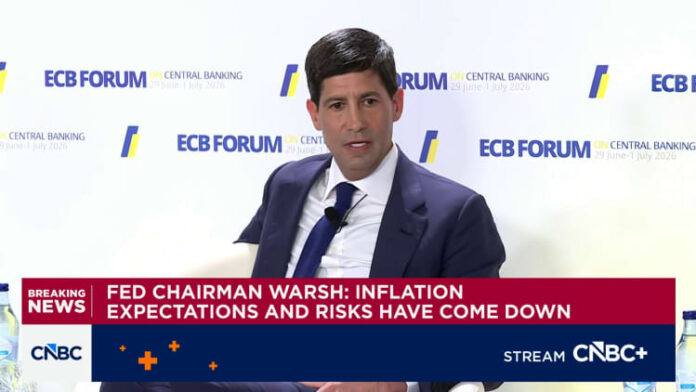
One significant development at the Federal Reserve (Fed) involves Chairman Kevin Warsh’s commitment to enhance the use of data in informing policy decisions. Warsh aims for a transformative approach over the next year, utilising advanced technologies to gain real-time insights into the economy.
Warsh, a longstanding critic of traditional data tools offered by government agencies, expressed a desire for the Fed to adopt a more innovative mindset. He stated that the prevailing conventional wisdom is his least preferred type of data. This shift in approach could reshape the Fed’s decision-making process, potentially enhancing its responsiveness to economic dynamics.
In a related context, Andrew Bailey, Governor of the Bank of England, indicated that central bankers are closely monitoring several emerging risks that might lead to financial instability. He highlighted trends such as increased leverage in government bond and equity markets. These changes prompt questions regarding potential risks that could escalate into broader economic consequences.
Moreover, Warsh is preparing to announce the leaders of five task forces designed to scrutinise Fed policies. He indicated that the announcement could occur soon, encompassing both seasoned experts and academics. This diverse input aims to enrich discussions within the Fed, acknowledging the value of international perspectives.
Additionally, Christine Lagarde, President of the European Central Bank, remarked on the interdependent relationship between Europe and the U.S. in the realm of artificial intelligence (AI). She noted that both regions rely on each other for progress in developing frontier companies necessary for advancement in this field.
As Warsh faces pressures regarding the independence of the Fed, he reaffirmed its commitment to operate autonomously despite external demands. His leadership will be pivotal in shaping the Fed’s strategies as it navigates upcoming economic challenges.
Test Your Understanding
How much do you know?