Warning: foreach() argument must be of type array|object, false given in /home/u750883576/domains/esl-news.com/public_html/wp-content/plugins/gpt-post-quiz/includes/admin/class-gpoq-admin-4.php on line 450
Warning: foreach() argument must be of type array|object, false given in /home/u750883576/domains/esl-news.com/public_html/wp-content/plugins/td-composer/legacy/common/wp_booster/td_menu.php on line 88
A European concept aims to use a laser beam to operate a rover in the Moon’s permanently shadowed areas. These regions are thought to contain water ice, a key resource for future space exploration.
The plan, developed under the European Space Agency (ESA) technology programmes, allows a robotic rover to work in total darkness. Instead of relying solely on onboard batteries, energy could be transmitted over distances of up to 15 kilometres, enabling the rover to move continuously even where sunlight does not reach.
In recent years, interest in these shadowed regions has increased. Multiple missions have found hydrogen, a strong sign of ice. Data from NASA’s Lunar Reconnaissance Orbiter, along with other missions, suggest that this ice may have remained stable for billions of years.
Water ice could be vital for providing drinking water, producing oxygen, and even creating fuel. However, exploring these cold and dark areas poses significant challenges.
Traditional power systems often use nuclear-based generators, which can ensure a stable energy supply but come with drawbacks such as cost and engineering complexity. In contrast, the proposed laser system reduces heat management issues and minimizes thermal impact on ice.
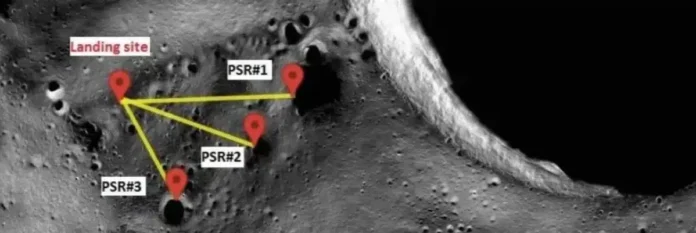
The project, called PHILIP (powering rovers by high intensity laser induction on planets), involves placing a lander in a sunlit zone near de Gerlache and Shackleton craters. This lander would aim a 500-watt infrared laser at a 250 kg rover, allowing it to convert the laser energy into electricity. Testing has already occurred in conditions similar to those on the Moon, and if successful, the project could lead to exploring previously inaccessible parts of the lunar surface.