Thursday, June 4, 2026

Americans Choose Ocean Landings for Spacecraft, Russians Opt for Solid Ground

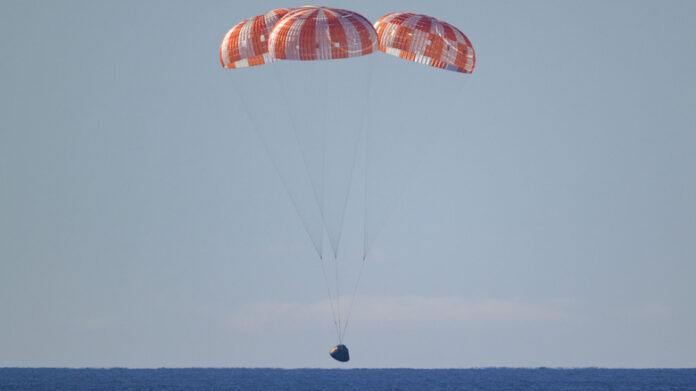
On April 10, NASA’s Artemis II mission saw the Orion spacecraft safely splash down off the coast of San Diego. However, it did not land directly on land, which would have been preferable. Ocean landings present challenges, like dealing with large waves and the need for U.S. Navy vessels to retrieve astronauts by helicopter. A land landing would be easier, allowing for quicker transport by truck. However, NASA’s technical choices meant that ocean splashdowns were necessary, despite their complexity.

Returning spacecraft come back to Earth at very high speeds. The Orion spacecraft, for example, reached Mach 35. Using parachutes alone slows the craft down only so much, and it still hit the water at 20 mph. Thus, NASA has opted for ocean landings to cushion the return.

The Russian spacecraft Soyuz, on the other hand, lands on solid ground using a different method. After using parachutes, it fires retrorockets just before touchdown to reduce speed to around 3 mph.

Although this Russian method has its benefits, it also has drawbacks, such as limited crew capacity. NASA and companies like Boeing are now exploring new technologies to improve land landings. Boeing’s Starliner plans to use inflatable bags for a softer landing, enhancing safety and retrieval efficiency. In September 2024, a Starliner successfully landed in New Mexico, marking progress in this area.


Test Your Understanding

Start Quiz

Vocabulary List:
6 words · tap to reveal
ON

Accent

parachutes/ˈpærəˌʃuːts/noun
fabric devices that slow a person or object

retrieve/rɪˈtriːv/verb
get something back after it was lost

retrorockets/ˈriːtroʊˌrɑkɪts/noun
small rockets fired backward to slow something

touchdown/ˈtʌtˌdaʊn/noun
the moment something touches the ground

capacity/kəˈpæsəti/noun
the number of people something can hold

inflatable/ɪnˈfleɪtəbəl/adjective
can be filled with air to become soft

How much do you know?

What was the mission of the Orion spacecraft that splashed down off the coast of San Diego?
Artemis I
Artemis II
Apollo 11
Gemini IV
What speed did the Orion spacecraft reach during its return to Earth?
Mach 25
Mach 30
Mach 35
Mach 40
What method does the Soyuz spacecraft use for landing?
Ocean splashdown
Solid ground landing
Airbag landing
Water landing
Which spacecraft is Boeing working on to improve landing safety?
Orion
Apollo
Starliner
Space Shuttle
What is one of the challenges of ocean landings for the Orion spacecraft?
Dealing with personnel retrieval
Limited crew capacity
High landing speeds
Parachute failure
Which feature is Boeing's Starliner planning to use for a softer landing?
Retrorockets
Inflatable bags
Parachutes
Water landing
The Orion spacecraft landed directly on land during the Artemis II mission.
NASA has chosen ocean splashdowns for their technical choices.
The Soyuz spacecraft lands at a speed of around 10 mph.
Boeing's Starliner aims to enhance safety through inflatable landing bags.
Ocean landings simplify the retrieval of astronauts compared to land landings.
The Orion spacecraft hits the water at 20 mph during splashdown.
The Orion spacecraft reached Mach 35, making it one of the fastest returning spacecraft, while the Soyuz reduces speed to around mph.
NASA has decided that ocean splashdowns are necessary despite their complexities.
A land landing would allow for quicker transport by .
Boeing's Starliner successfully landed in in September 2024.
The need for U.S. Navy vessels to retrieve astronauts arises from the challenges of landings.
After using parachutes, the Soyuz spacecraft fires just before touchdown.
This question is required

Test Your Understanding

Start Quiz
Vocabulary List:
6 words · tap to reveal
ON
Accent
parachutes/ˈpærəˌʃuːts/noun
fabric devices that slow a person or object
retrieve/rɪˈtriːv/verb
get something back after it was lost
retrorockets/ˈriːtroʊˌrɑkɪts/noun
small rockets fired backward to slow something
touchdown/ˈtʌtˌdaʊn/noun
the moment something touches the ground
capacity/kəˈpæsəti/noun
the number of people something can hold
inflatable/ɪnˈfleɪtəbəl/adjective
can be filled with air to become soft

How much do you know?

What was the mission of the Orion spacecraft that splashed down off the coast of San Diego?
Artemis I
Artemis II
Apollo 11
Gemini IV
What speed did the Orion spacecraft reach during its return to Earth?
Mach 25
Mach 30
Mach 35
Mach 40
What method does the Soyuz spacecraft use for landing?
Ocean splashdown
Solid ground landing
Airbag landing
Water landing
Which spacecraft is Boeing working on to improve landing safety?
Orion
Apollo
Starliner
Space Shuttle
What is one of the challenges of ocean landings for the Orion spacecraft?
Dealing with personnel retrieval
Limited crew capacity
High landing speeds
Parachute failure
Which feature is Boeing's Starliner planning to use for a softer landing?
Retrorockets
Inflatable bags
Parachutes
Water landing
The Orion spacecraft landed directly on land during the Artemis II mission.
NASA has chosen ocean splashdowns for their technical choices.
The Soyuz spacecraft lands at a speed of around 10 mph.
Boeing's Starliner aims to enhance safety through inflatable landing bags.
Ocean landings simplify the retrieval of astronauts compared to land landings.
The Orion spacecraft hits the water at 20 mph during splashdown.
The Orion spacecraft reached Mach 35, making it one of the fastest returning spacecraft, while the Soyuz reduces speed to around mph.
NASA has decided that ocean splashdowns are necessary despite their complexities.
A land landing would allow for quicker transport by .
Boeing's Starliner successfully landed in in September 2024.
The need for U.S. Navy vessels to retrieve astronauts arises from the challenges of landings.
After using parachutes, the Soyuz spacecraft fires just before touchdown.
This question is required

Read More