

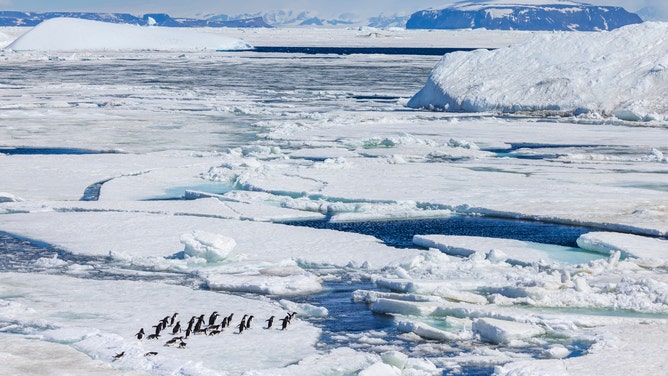
Antarctica, often seen as a frozen wasteland, is in fact the largest desert on Earth. Unlike hot deserts such as the Sahara or Death Valley, it is defined by extreme cold and a severe lack of moisture. This unique classification highlights that deserts are determined by precipitation levels rather than temperature.
Antarctica receives only about 2 inches of precipitation each year, making it one of the driest places on the planet. Spanning approximately 5.4 million square miles, it is about 1.5 times the size of the Sahara Desert. This means that snow drifting across its surface is not from new storms, but ancient snow crystals that are continuously reshaped by the harsh winds.
Despite its cold climate, Antarctica holds around 90% of the world’s ice and 70% of its fresh water. The conditions here are so extreme that NASA often compares Antarctica’s desert-like environment to that of Mars. This comparison arises from similar characteristics, as NASA has tested equipment in Antarctica that was later used on the Martian surface.
The idea that a place so icy could be classified as a desert challenges common notions about these environments. As scientists continue to study Antarctica, our understanding of deserts and their classifications may evolve.