Wednesday, July 15, 2026

Cycling Improves Sleep Quality, Study Finds

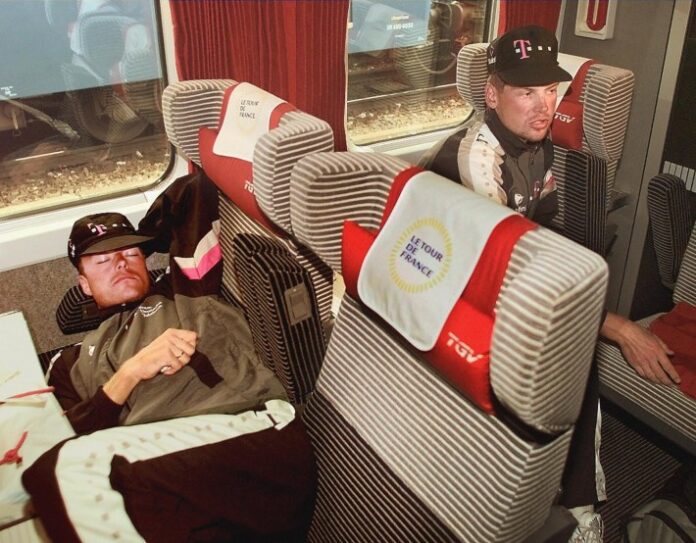
Is the Tour de France the most competitive sleep environment in sports? Dr. Jon Greenwell, Head Doctor for EF-Education EasyPost, suggests it probably is. Professional cyclists face unique demands during the race, which spans nearly a month. They must recover sufficiently to perform at their best each day while often staying in different hotels. With only two rest days, securing adequate sleep is crucial; without it, they cannot race effectively.

Dr. Greenwell’s primary task during the Tour is ensuring riders get high-quality sleep nightly. On the first rest day, I spoke with him and Walid Karim, who manages the team’s sleep equipment. The team’s approach incorporates cutting-edge technology, and last year, riders averaged over eight hours of sleep each night.

Attention to sleep has surged in recent years. When Greenwell joined the team a decade ago, sleep practices were less refined, with many relying on uncomfortable hotel bedding. Cycling has advanced not only in this area but also in sports science overall. As athletes seek to optimise performance, the pursuit of health has become a common goal.

The desire for optimal well-being has intensified amid modern pressures. Yet, effective approaches largely involve straightforward habits: prioritising sleep, nutrition, and mental health. These fundamental practices are accessible compared to the high-tech solutions often presented in wellness culture.

At the Tour de France, sleep is meticulously managed. Cyclists’ physical conditions are monitored extensively, with many wearing sleep trackers. After races, they are cooled down, fed promptly, and provided with restorative drinks. Individualized pillows cater to their specific needs, and Greenwell avoids sleep medication, preferring to cultivate a natural sleep environment.

Teams rely on the Amaury Sport Organization (ASO) for hotel arrangements during the race. Though they receive quality accommodations, surprises can occur, as seen when some riders faced unexpected room issues. Innovations, including smart mattress toppers tailored to individual riders’ preferences, enhance their sleep quality, while routines emphasise hydration and relaxation techniques.

While cutting-edge sleep technology can be prohibitively expensive, the fundamental actions required for quality rest remain within reach for everyone. Ultimately, the best sleeping practices emphasise accessible methods, demonstrating that professional cycling teams like EF are striving to achieve the same essential goal: restful sleep.

Test Your Understanding

Start Quiz

Vocabulary List:
6 words · tap to reveal
ON

Accent

recover/rɪˈkʌvər/verb
get back strength or health after effort

crucial/ˈkruʃəl/adjective
very important and needed for success

technology/tɛkˈnɑlədʒi/noun
machines, tools, or knowledge used for tasks

monitored/ˈmɑnətərd/verb
watched or checked regularly for changes

restorative/rɪˈstɔrətɪv/adjective
helping the body or mind get better

accessible/əkˈsɛsəbəl/adjective
easy to reach, use, or obtain

How much do you know?

Who is the Head Doctor for EF-Education EasyPost during the Tour de France?
Walid Karim
Dr. Jon Greenwell
Amaury Sport Organization
Unidentified Team Manager
How many rest days are there during the Tour de France?
1
2
3
4
What average amount of sleep did riders get per night last year?
6 hours
7 hours
8 hours
9 hours
What is a primary focus for cyclists in the Tour de France according to Dr. Greenwell?
Nutrition
Mental health
High-quality sleep
Hydration
What type of monitoring do cyclists undergo to enhance sleep quality?
Heart rate monitors
Sleep trackers
Wearable fitness trackers
Blood pressure monitors
What does Dr. Greenwell prefer to use instead of sleep medication?
Caffeine
Natural sleep environment
Sleeping pills
Meditation
Dr. Jon Greenwell suggests the Tour de France is not competitive with sleep.
Cyclists at the Tour de France often stay in the same hotel.
The desire for optimal well-being among cyclists has decreased in recent years.
Riders are provided with individualized pillows to enhance their sleep.
The Amaury Sport Organization is responsible for arranging hotel accommodations for teams.
Sleep technology is always affordable for professional cyclists.
Cyclists face unique demands during the race, which spans nearly a month, and must recover sufficiently to perform at their best each day while often staying in different hotels. With only two rest days, securing adequate sleep is crucial; without it, they cannot race effectively.
Dr. Greenwell's primary task during the Tour is ensuring riders get high-quality sleep night.
The team's approach incorporates cutting-edge technology, and last year, riders averaged over eight hours of each night.
Cycling has advanced not only in this area but also in sports science .
At the Tour de France, sleep is meticulously managed, with many wearing sleep .
While cutting-edge sleep technology can be prohibitively expensive, the fundamental actions required for quality remain within reach for everyone.
This question is required

Test Your Understanding

Start Quiz
Vocabulary List:
6 words · tap to reveal
ON
Accent
recover/rɪˈkʌvər/verb
get back strength or health after effort
crucial/ˈkruʃəl/adjective
very important and needed for success
technology/tɛkˈnɑlədʒi/noun
machines, tools, or knowledge used for tasks
monitored/ˈmɑnətərd/verb
watched or checked regularly for changes
restorative/rɪˈstɔrətɪv/adjective
helping the body or mind get better
accessible/əkˈsɛsəbəl/adjective
easy to reach, use, or obtain

How much do you know?

Who is the Head Doctor for EF-Education EasyPost during the Tour de France?
Walid Karim
Dr. Jon Greenwell
Amaury Sport Organization
Unidentified Team Manager
How many rest days are there during the Tour de France?
1
2
3
4
What average amount of sleep did riders get per night last year?
6 hours
7 hours
8 hours
9 hours
What is a primary focus for cyclists in the Tour de France according to Dr. Greenwell?
Nutrition
Mental health
High-quality sleep
Hydration
What type of monitoring do cyclists undergo to enhance sleep quality?
Heart rate monitors
Sleep trackers
Wearable fitness trackers
Blood pressure monitors
What does Dr. Greenwell prefer to use instead of sleep medication?
Caffeine
Natural sleep environment
Sleeping pills
Meditation
Dr. Jon Greenwell suggests the Tour de France is not competitive with sleep.
Cyclists at the Tour de France often stay in the same hotel.
The desire for optimal well-being among cyclists has decreased in recent years.
Riders are provided with individualized pillows to enhance their sleep.
The Amaury Sport Organization is responsible for arranging hotel accommodations for teams.
Sleep technology is always affordable for professional cyclists.
Cyclists face unique demands during the race, which spans nearly a month, and must recover sufficiently to perform at their best each day while often staying in different hotels. With only two rest days, securing adequate sleep is crucial; without it, they cannot race effectively.
Dr. Greenwell's primary task during the Tour is ensuring riders get high-quality sleep night.
The team's approach incorporates cutting-edge technology, and last year, riders averaged over eight hours of each night.
Cycling has advanced not only in this area but also in sports science .
At the Tour de France, sleep is meticulously managed, with many wearing sleep .
While cutting-edge sleep technology can be prohibitively expensive, the fundamental actions required for quality remain within reach for everyone.
This question is required

Read More