Warning: foreach() argument must be of type array|object, false given in /home/u750883576/domains/esl-news.com/public_html/wp-content/plugins/gpt-post-quiz/includes/admin/class-gpoq-admin-4.php on line 450
Warning: foreach() argument must be of type array|object, false given in /home/u750883576/domains/esl-news.com/public_html/wp-content/plugins/td-composer/legacy/common/wp_booster/td_menu.php on line 88
A reliable supply of computer chips is crucial for Arnob Roy, co-founder of Tejas Networks in Bangalore, India. His company provides the technology that supports mobile phone networks and broadband connections. Tejas designs specialized chips for telecoms, which handle large amounts of data from many users at once. These chips are essential for maintaining network reliability and performance.
India has a strong reputation for designing computer chips, with about 20% of the world’s semiconductor engineers based there. However, the country does not produce the chips itself. Instead, Indian firms like Tejas send designs to be manufactured abroad. This system faced challenges during the Covid pandemic, which disrupted global chip supplies.
The Indian government has started promoting a domestic semiconductor industry to lessen this dependency. This initiative aims to improve resilience in electronics manufacturing. Amitesh Kumar Sinha, a government official, explained that India is focusing on areas where it can compete, such as assembly and testing of chips.
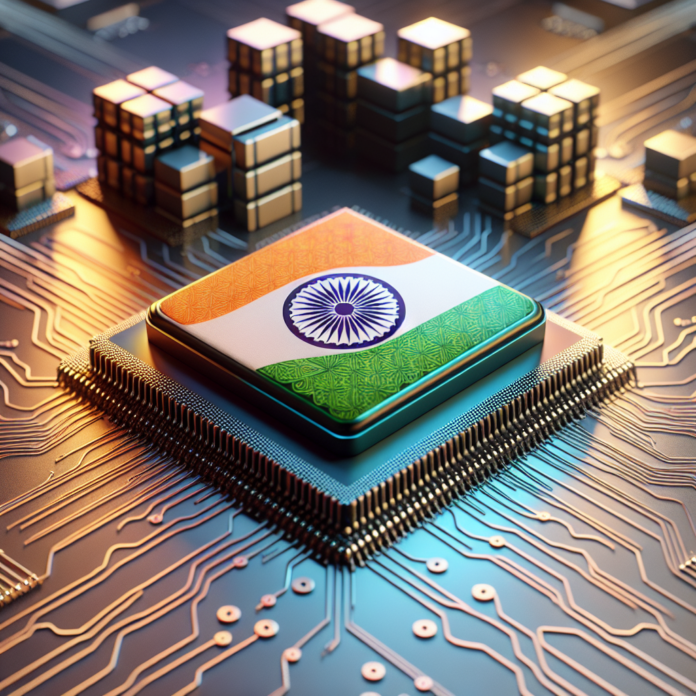
Recently, Kaynes Semicon became the first Indian company to operate a semiconductor plant, supported by government investments. The factory focuses on assembling and testing chips for sectors like cars and telecoms, rather than the most advanced types. Arnob Roy believes that developing local manufacturing will benefit companies like his in the future, marking the beginning of a long journey for India in semiconductor production.
Test Your Understanding
Start Quiz
Vocabulary List:
6 words · tap to reveal
ON
Accent
Reliability/rɪˈlaɪ.ə.bɪ.lɪ.ti/noun
The quality of being dependable or trustworthy.
Dependency/dɪˈpɛn.dən.si/noun
A situation in which someone or something relies on another for support or supply.
Resilience/rɪˈzɪl.jəns/noun
The ability to recover quickly from difficulties or adapt to change.
Manufactured/ˌmæn.juˈfæk.tʃəd/verb
Produced especially on a large scale using machinery.
Initiative/ɪˈnɪʧ.ə.tɪv/noun
The ability to assess and initiate things independently; an enterprise or project.
Semiconductor/ˈsɛmɪkənˌdʌktər/noun
A material with electrical conductivity between that of a conductor and an insulator used in electronic devices.