

I am currently at home, enjoying a holiday with my family. My children, Jessica, Sarah, Wendy, and Charly, are here, filling the house with joy. My dog, Gino, is nearby, and my two donkeys, Tsigane and Safira, graze outside. These days are simple, but they are also filled with ideas as I write articles and prepare teaching materials. Tonight, I want to talk about a fascinating topic: gravitational assist.
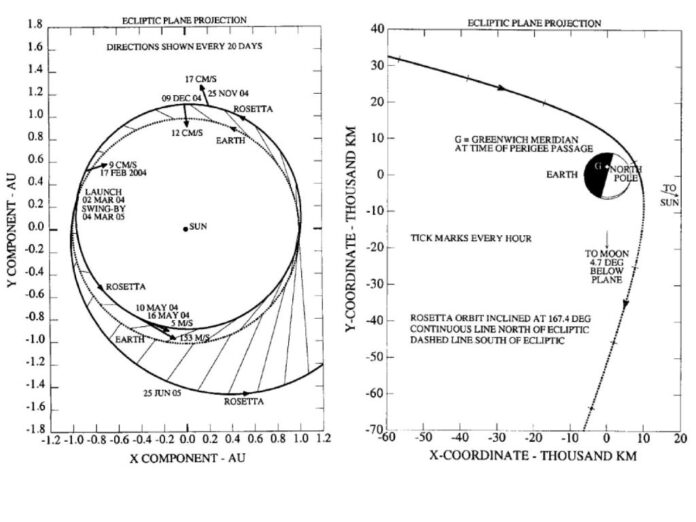
Gravitational assist works like this: Imagine a train moving fast. If you throw a ball at it, the ball bounces off and goes faster than it came. When a space probe approaches a large planet, like Jupiter, it can gain some of the planet’s speed. The probe moves away faster, while the planet slows down slightly.
A great example of this is the Voyager 2 probe, which launched in 1977. It visited the planets Jupiter, Saturn, Uranus, and Neptune, using gravitational assists to travel quickly between them. This mission was possible because the planets were aligned perfectly. Without these assists, the journey would have taken much longer.
To plan such missions, scientists use complex calculations. They ensure that planets are in the right positions when the probe arrives. This careful planning allows us to explore space efficiently, showing how we can work with nature’s forces to reach our goals.


