Sunday, June 28, 2026

Next-Gen Moon Rovers Set for Deployment Ahead of Artemis 4

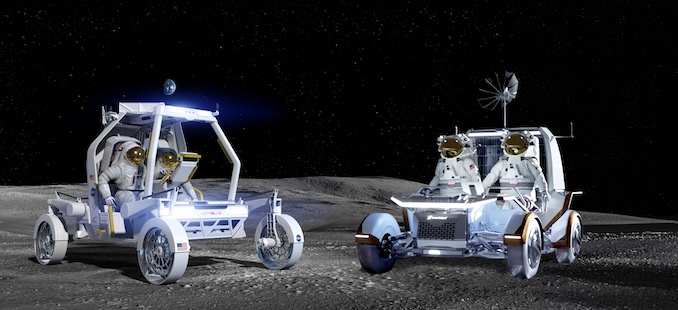
NASA aims to build a large Moon Base near the lunar south pole, and this depends on moving astronauts properly. Currently, two companies, Astrolab and Lunar Outpost, are competing to create lunar vehicles to help NASA by the end of 2027.

Last month, NASA chose these two companies to develop lunar terrain vehicles (LTVs). Originally, three companies were in the race for one contract, but NASA decided to simplify the design. The new vehicles will not need to last a decade on the Moon; they should be ready for the Artemis program’s first crewed landing, planned for early 2028.

Astrobotic is developing the Crewed Lunar Vehicle (CLV-1), which will carry humans and cargo. Astrolab’s CEO mentioned that they have a strong foundation from previous work that can help with the CLV. Lunar Outpost is focusing on its Pegasus rover, learning from their smaller robotic rovers. Their rover will assist astronauts, allowing for human-robot interaction on the Moon.

Both companies face challenges, including surviving extreme cold temperatures during lunar nights, which can drop to about -400 degrees Fahrenheit. They plan to use onboard energy storage to keep the vehicles warm during this time.

A major concern is getting these vehicles to the Moon. NASA has selected Blue Origin to manage the launch, using their New Glenn rocket, after other options faced setbacks due to a recent explosion at their launch site. NASA is working on solutions to prevent delays in their Moon Base missions.

Test Your Understanding

Start Quiz

Vocabulary List:
6 words · tap to reveal
ON

Accent

competing/kəmˈpiːtɪŋ/verb
trying to win or be better than others

terrain/təˈreɪn/noun
the type of land in an area

contract/ˈkɑntrækt/noun
a written agreement to do work or services

crewed/kruːd/adjective
having people on board or inside

interaction/ˌɪntɚˈækʃən/noun
when two people or things act together

setbacks/ˈsɛtˌbæks/noun
problems that stop or slow progress

How much do you know?

Which two companies are competing to create lunar vehicles for NASA?
Astrobotic and Blue Origin
Astrolab and Lunar Outpost
NASA and SpaceX
Lunar Outpost and Astrobotic
By when does NASA aim to have the lunar vehicles ready?
2025
2026
2027
2028
What will Astrobotic's Crewed Lunar Vehicle (CLV-1) transport?
Only cargo
Only humans
Humans and cargo
Scientific instruments
Which company is managing the launch to the Moon?
NASA
Astrolab
Lunar Outpost
Blue Origin
What extreme temperature can lunar nights reach?
-200 degrees Fahrenheit
-300 degrees Fahrenheit
-400 degrees Fahrenheit
-500 degrees Fahrenheit
Which rocket is being used for the launch to the Moon?
Falcon 9
New Glenn
Atlas V
Electron
NASA plans to build a Moon Base near the lunar north pole.
Astrolab is focusing on developing a lunar terrain vehicle (LTV).
NASA had six companies originally in the race for the lunar vehicle contract.
NASA's Artemis program's first crewed landing is planned for early 2028.
Both companies are not facing any significant challenges with their lunar vehicles.
The vehicles need to last more than a decade on the Moon.
NASA aims to build a large Moon Base near the lunar south pole, and this depends on moving astronauts properly. Currently, two companies, Astrolab and Lunar Outpost, are competing to create lunar vehicles to help NASA by the end of .
A major concern is getting these vehicles to the Moon. NASA has selected Blue Origin to manage the .
Astrobotic is developing the Crewed Lunar Vehicle (CLV-1), which will carry and cargo.
Their rover will assist astronauts, allowing for interaction on the Moon.
Both companies face challenges, including surviving extreme cold temperatures during lunar .
They plan to use onboard energy storage to keep the vehicles during this time.
This question is required

Test Your Understanding

Start Quiz
Vocabulary List:
6 words · tap to reveal
ON
Accent
competing/kəmˈpiːtɪŋ/verb
trying to win or be better than others
terrain/təˈreɪn/noun
the type of land in an area
contract/ˈkɑntrækt/noun
a written agreement to do work or services
crewed/kruːd/adjective
having people on board or inside
interaction/ˌɪntɚˈækʃən/noun
when two people or things act together
setbacks/ˈsɛtˌbæks/noun
problems that stop or slow progress

How much do you know?

Which two companies are competing to create lunar vehicles for NASA?
Astrobotic and Blue Origin
Astrolab and Lunar Outpost
NASA and SpaceX
Lunar Outpost and Astrobotic
By when does NASA aim to have the lunar vehicles ready?
2025
2026
2027
2028
What will Astrobotic's Crewed Lunar Vehicle (CLV-1) transport?
Only cargo
Only humans
Humans and cargo
Scientific instruments
Which company is managing the launch to the Moon?
NASA
Astrolab
Lunar Outpost
Blue Origin
What extreme temperature can lunar nights reach?
-200 degrees Fahrenheit
-300 degrees Fahrenheit
-400 degrees Fahrenheit
-500 degrees Fahrenheit
Which rocket is being used for the launch to the Moon?
Falcon 9
New Glenn
Atlas V
Electron
NASA plans to build a Moon Base near the lunar north pole.
Astrolab is focusing on developing a lunar terrain vehicle (LTV).
NASA had six companies originally in the race for the lunar vehicle contract.
NASA's Artemis program's first crewed landing is planned for early 2028.
Both companies are not facing any significant challenges with their lunar vehicles.
The vehicles need to last more than a decade on the Moon.
NASA aims to build a large Moon Base near the lunar south pole, and this depends on moving astronauts properly. Currently, two companies, Astrolab and Lunar Outpost, are competing to create lunar vehicles to help NASA by the end of .
A major concern is getting these vehicles to the Moon. NASA has selected Blue Origin to manage the .
Astrobotic is developing the Crewed Lunar Vehicle (CLV-1), which will carry and cargo.
Their rover will assist astronauts, allowing for interaction on the Moon.
Both companies face challenges, including surviving extreme cold temperatures during lunar .
They plan to use onboard energy storage to keep the vehicles during this time.
This question is required

Read More