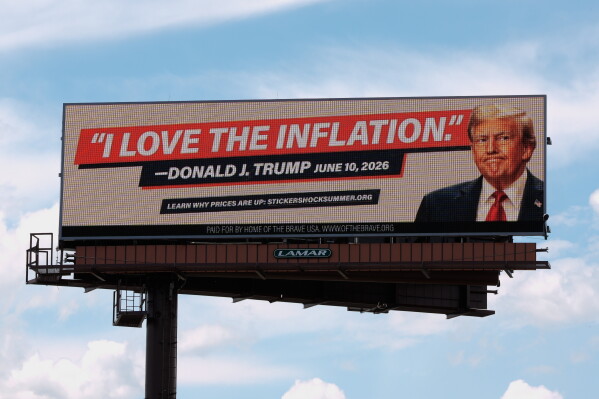
The economy’s status and inflationary trends have become critical topics for Americans recently. Increased prices at grocery stores and gas stations are affecting household and business choices, signalling broader societal implications.
In May, the Federal Reserve’s primary inflation measure reached its highest point in three years, coinciding with peak gas prices. This surge in costs could create political challenges for President Donald Trump and his party as the midterm elections approach. According to the Commerce Department, consumer prices rose by 4.1% year-on-year in May, an annual increase not seen since April 2023. Month-to-month, inflation held steady at 0.4%, identical to April’s figures and a decrease from March’s 0.7%.
The hike in inflation largely stems from rising gas prices, compounded by soaring semiconductor costs, essential for the burgeoning artificial intelligence sector. Concurrently, Apple announced price increases for its Macs and iPads, attributing this decision to a shortage of memory chips sparked by increasing demand for AI technology. The new entry-level MacBook Neo is priced at $699, up from $599, while the 512GB MacBook Air now costs $1,299, up from $1,099.
Despite these inflationary pressures, the U.S. economy demonstrated unexpected growth of 2.1% in the first quarter, a recovery from a sluggish 0.5% in late 2025, partly due to a federal government shutdown. Increased business investments, particularly in AI, contributed to this growth. However, a noticeable decline in consumer spending reflects the impact of higher gasoline prices resulting from geopolitical tensions.
As mortgage rates rise, the average 30-year fixed mortgage has reached 6.49%, increasing borrowers’ monthly costs. Jobless aid applications have decreased, with 215,000 claims filed, signalling a resilient job market amid these economic uncertainties.
Looking ahead, the interplay between inflation, government responses, and consumer behaviour remains pivotal in shaping the economic landscape.