Tuesday, June 30, 2026

Scientists Explore Ways to Reverse Cellular Ageing

Understanding the biological mechanisms behind ageing requires an examination of the gradual decline occurring within individual cells. Researchers from the Fritz Lipmann Institute in Germany have investigated how mitochondria, the energy-producing organelles within cells, slow their function over time.

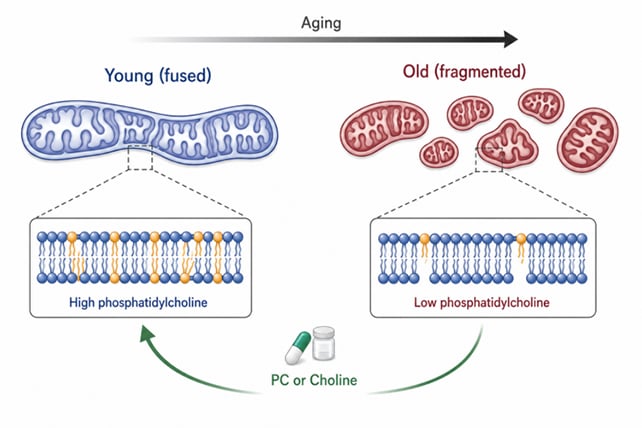
Their study, which analysed worm models, human tissues, and human cells, revealed a significant reduction in levels of a specific lipid called phosphatidylcholine as individuals age. This decline negatively impacts mitochondrial efficiency. The researchers demonstrated that dietary restoration of phosphatidylcholine can rejuvenate ageing mitochondria.

Phosphatidylcholine plays a crucial role in maintaining mitochondrial membranes, which are essential for their proper function. As phosphatidylcholine levels deplete, mitochondria struggle to operate effectively, leading to fragmentation and dysfunction. Interestingly, supplementing the diets of worms with phosphatidylcholine or choline, a precursor to phosphatidylcholine, restored mitochondrial flexibility and function.

The study identified that lower levels of phosphatidylcholine were associated with health conditions such as diabetes and obesity while higher levels correlated with better mobility and cognitive function in older adults. Furthermore, experiments revealed that phosphatidylcholine synthesis decreases as organisms age, diminishing the mitochondria’s capacity to produce their necessary membranes.

Notably, the research indicated gender differences; men exhibited a gradual decline in phosphatidylcholine, whereas women experienced a sharper decrease, particularly during menopause. This shift may contribute to the fatigue many women report at this life stage.

The researchers plan to further explore how lower phosphatidylcholine levels affect mitochondrial membranes at a molecular level, aiming to uncover the structural changes involved. This study highlights a potential pathway to address some age-related mitochondrial dysfunctions, suggesting that understanding these processes might enable targeted interventions in the future.

Test Your Understanding

Start Quiz

Vocabulary List:
6 words · tap to reveal
ON

Accent

mitochondria/ˌmaɪtəˈkɑndriə/noun
parts inside cells that make energy

phosphatidylcholine/ˌfɑsfəˌtɪdəˈkoʊliːn/noun
a molecule in cells that helps make membranes

lipid/ˈlɪpɪd/noun
a natural fat or molecule in cells

precursor/prɪˈkɝsər/noun
a substance that comes before something else

synthesis/ˈsɪnθəsɪs/noun
the making of something, often inside cells

dysfunction/dɪsˈfʌŋkʃən/noun
when something does not work correctly

How much do you know?

What organelles are responsible for energy production within cells?
Nucleus
Ribosomes
Mitochondria
Endoplasmic Reticulum
Which lipid shows a significant reduction as individuals age?
Cholesterol
Phosphatidylcholine
Triglycerides
Phospholipid
In which animal models did the researchers conduct their study?
Mice
Rats
Worms
Fish
What dietary substance was shown to rejuvenate ageing mitochondria?
Glucose
Phosphatidylcholine
Fatty Acids
Proteins
What health conditions were associated with lower levels of phosphatidylcholine?
Heart Disease
Diabetes and Obesity
Asthma
Cancer
Which gender showed a sharper decrease in phosphatidylcholine during menopause?
Men
Women
Both
Neither
Mitochondria are responsible for producing DNA within cells.
Phosphatidylcholine is essential for maintaining mitochondrial membranes.
The study conducted by researchers included analysis of human tissues.
Men and women experience the same rate of decline in phosphatidylcholine.
Dietary supplementation of choline had no effect on mitochondrial function.
Understanding phosphatidylcholine levels could lead to targeted interventions for age-related mitochondrial dysfunction.
As individuals age, levels of phosphatidylcholine .
Mitochondria struggle to operate effectively due to depleted levels.
The study indicated that lower phosphatidylcholine levels were associated with health conditions such as diabetes and .
Phosphatidylcholine plays a crucial role in maintaining mitochondrial .
The researchers plan to explore how lower phosphatidylcholine levels affect mitochondrial membranes at a level.
During menopause, women experience a decrease in phosphatidylcholine.
This question is required

Test Your Understanding

Start Quiz
Vocabulary List:
6 words · tap to reveal
ON
Accent
mitochondria/ˌmaɪtəˈkɑndriə/noun
parts inside cells that make energy
phosphatidylcholine/ˌfɑsfəˌtɪdəˈkoʊliːn/noun
a molecule in cells that helps make membranes
lipid/ˈlɪpɪd/noun
a natural fat or molecule in cells
precursor/prɪˈkɝsər/noun
a substance that comes before something else
synthesis/ˈsɪnθəsɪs/noun
the making of something, often inside cells
dysfunction/dɪsˈfʌŋkʃən/noun
when something does not work correctly

How much do you know?

What organelles are responsible for energy production within cells?
Nucleus
Ribosomes
Mitochondria
Endoplasmic Reticulum
Which lipid shows a significant reduction as individuals age?
Cholesterol
Phosphatidylcholine
Triglycerides
Phospholipid
In which animal models did the researchers conduct their study?
Mice
Rats
Worms
Fish
What dietary substance was shown to rejuvenate ageing mitochondria?
Glucose
Phosphatidylcholine
Fatty Acids
Proteins
What health conditions were associated with lower levels of phosphatidylcholine?
Heart Disease
Diabetes and Obesity
Asthma
Cancer
Which gender showed a sharper decrease in phosphatidylcholine during menopause?
Men
Women
Both
Neither
Mitochondria are responsible for producing DNA within cells.
Phosphatidylcholine is essential for maintaining mitochondrial membranes.
The study conducted by researchers included analysis of human tissues.
Men and women experience the same rate of decline in phosphatidylcholine.
Dietary supplementation of choline had no effect on mitochondrial function.
Understanding phosphatidylcholine levels could lead to targeted interventions for age-related mitochondrial dysfunction.
As individuals age, levels of phosphatidylcholine .
Mitochondria struggle to operate effectively due to depleted levels.
The study indicated that lower phosphatidylcholine levels were associated with health conditions such as diabetes and .
Phosphatidylcholine plays a crucial role in maintaining mitochondrial .
The researchers plan to explore how lower phosphatidylcholine levels affect mitochondrial membranes at a level.
During menopause, women experience a decrease in phosphatidylcholine.
This question is required

Read More