Warning: foreach() argument must be of type array|object, false given in /home/u750883576/domains/esl-news.com/public_html/wp-content/plugins/gpt-post-quiz/includes/admin/class-gpoq-admin-4.php on line 450
Warning: foreach() argument must be of type array|object, false given in /home/u750883576/domains/esl-news.com/public_html/wp-content/plugins/td-composer/legacy/common/wp_booster/td_menu.php on line 88
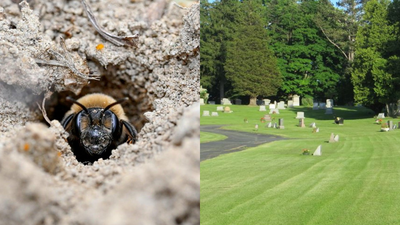
Researchers have found about 5.5 million mining bees living beneath a cemetery in Ithaca, New York. This important discovery shows that the bees have lived there for over a hundred years. The bees survive because the area has undisturbed soil and good conditions for nesting.
Mining bees are different from honeybees. Each female bee makes and cares for her own nest underground. Unlike honeybees, there is no queen or hive. Researchers think there may be as many as 8 million bees in total at the cemetery, making it one of the largest known groups of these bees.
The cemetery has been a safe home for these bees for many years. It has good soil and experiences little disturbance. This shows how important it is to protect quiet places for bees and other wildlife.
The bees also help pollinate nearby orchards, including apple trees. However, many ground-nesting bees are losing their homes due to urban development and pesticides. Scientists want to learn more about these bees to help protect them. The discovery highlights the need to look after these natural habitats.
How many mining bees are researchers estimating to potentially live at the cemetery?
5 million
8 million
10 million
3 million
What type of bees are mining bees different from?
Bumblebees
Honeybees
Carpenter bees
Sweat bees
What is essential for the survival of mining bees according to the researchers?
Urban development
Good conditions for nesting
Seasonal flowers
High temperatures
What do mining bees help pollinate?
Vegetable gardens
Nearby orchards
Flower beds
Lawns
Why are many ground-nesting bees losing their homes?
Habitat protection
Urban development and pesticides
Natural disasters
Competition with other species
Mining bees live in hives like honeybees.
The cemetery has experienced a lot of disturbance.
Mining bees can help pollinate apple trees.
There are about 5.5 million mining bees living under the cemetery.
The discovery of mining bees emphasizes the need to protect urban areas.
Each female mining bee makes her own nest underground.
Researchers have found about 5.5 million mining bees living beneath a cemetery in Ithaca, New York. This important discovery shows that the bees have lived there for over a hundred years. The bees survive because the area has undisturbed soil and good conditions for .
Each female bee makes and cares for her own nest .
Unlike honeybees, there is no queen or .
The cemetery has been a safe home for these bees for many .
Scientists want to learn more about these bees to help them.
The discovery highlights the need to look after these natural .
How many mining bees are researchers estimating to potentially live at the cemetery?
5 million
8 million
10 million
3 million
What type of bees are mining bees different from?
Bumblebees
Honeybees
Carpenter bees
Sweat bees
What is essential for the survival of mining bees according to the researchers?
Urban development
Good conditions for nesting
Seasonal flowers
High temperatures
What do mining bees help pollinate?
Vegetable gardens
Nearby orchards
Flower beds
Lawns
Why are many ground-nesting bees losing their homes?
Habitat protection
Urban development and pesticides
Natural disasters
Competition with other species
Mining bees live in hives like honeybees.
The cemetery has experienced a lot of disturbance.
Mining bees can help pollinate apple trees.
There are about 5.5 million mining bees living under the cemetery.
The discovery of mining bees emphasizes the need to protect urban areas.
Each female mining bee makes her own nest underground.
Researchers have found about 5.5 million mining bees living beneath a cemetery in Ithaca, New York. This important discovery shows that the bees have lived there for over a hundred years. The bees survive because the area has undisturbed soil and good conditions for .
Each female bee makes and cares for her own nest .
Unlike honeybees, there is no queen or .
The cemetery has been a safe home for these bees for many .
Scientists want to learn more about these bees to help them.
The discovery highlights the need to look after these natural .