

Christopher Nolan’s adaptation of Homer’s “The Odyssey” has captivated audiences and reignited interest in Greek literature and its many cinematic interpretations. The story, nearly 3,000 years old, narrates a man’s arduous journey home to Ithaca after the Trojan War, illustrating its enduring appeal.
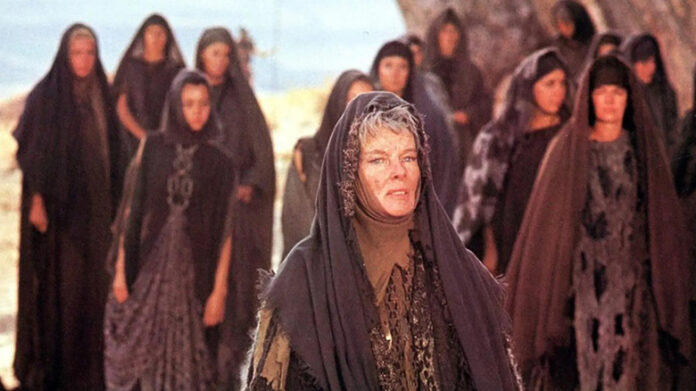
However, the tales following Troy’s downfall also merit attention. One significant narrative is “The Trojan Women,” a tragedy penned by Euripides around 2,500 years ago. This play, celebrated for its profound themes, tells the plight of women left to grapple with the consequences of war. The 1971 film adaptation, directed by Michael Cacoyannis, features an impressive cast including Katharine Hepburn and Vanessa Redgrave and has prompted further exploration into the themes of loss and suffering.
Cacoyannis’ version sticks closely to the original text, although it omits the presence of Greek gods. Critics have noted that the film’s dialogue often resembles a stage play, which may come across as jarring. Notably, it shifts the narrative focus from heroism to the deep grief and desolation faced by women after the war, rejecting the glorification of conquest.
Cacoyannis aimed to highlight the universality of war’s brutality by casting prominent actresses and framing the narrative in English. Some critics argue that the film’s emotional intensity may become overwhelming, pointing to a double standard in audience reactions to expressions of grief in male-led narratives.
“The Trojan Women” remains relevant today, resonating with audiences due to its anti-war sentiment. Recent works, such as “A Thousand Ships” by Natalie Haynes, have further explored these themes. With renewed interest following Nolan’s success, there is potential for another adaptation. The film ends with a poignant dedication, an evergreen reminder of the plight of those affected by war, emphasising that such conflict impacts far more than just the combatants involved.
Test Your Understanding
How much do you know?



