Friday, March 20, 2026

Scientists Discover 28 Possible New Species in Argentina’s Seafloor

A deep-sea mission took place off the coast of Argentina. Scientists discovered a rich marine ecosystem. They found many possible new species and rare marine animals. The mission focused on cold seeps, which are areas in the ocean where chemicals come out of the sea floor.

The Schmidt Ocean Institute led the mission with the research vessel Falkor (too). This ship has made important discoveries before, like new types of squid and octopus. The scientists wanted to study how life grows around cold seeps.

They found one active seep but saw a lot of marine life everywhere. This was surprising. It showed that different ecosystems exist beyond just the seep areas.

The team found 28 possible new species. These included sea snails, sea urchins, and anemones. They discovered a large coral reef, which is the biggest known of its kind. This reef provides homes for many species.

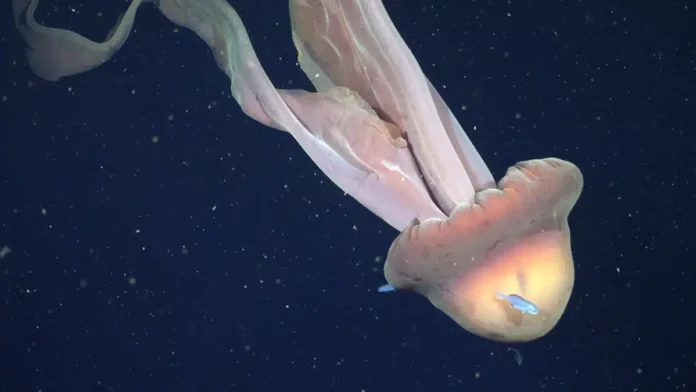
The mission also recorded images of a rare jellyfish and a whale fall, which is when a whale’s body supports life after it dies. Scientists continue to learn about the deep sea through their hard work.


Test Your Understanding

Start Quiz

Vocabulary List:
6 words · tap to reveal
OFF

AccentSpeed

seeps/siːps/noun
places in the sea where chemicals come out

ecosystem/ˈiːkoʊˌsɪstəm/noun
a group of living things and their environment

species/ˈspiːʃiz/noun
a group of animals or plants of same kind

vessel/ˈvɛsəl/noun
a large ship used for travel or research

reef/riːf/noun
a group of rock or coral under the sea

anemones/əˈnɛmənz/noun
sea animals that look like flowers with tentacles

How much do you know?

What was the deep-sea mission off the coast of Argentina focused on?
Coral reefs
Cold seeps
Ocean currents
Sea turtles
Which research vessel led the deep-sea mission?
Nautilus
Endeavor
Falkor
Discovery
How many possible new species did the team find during the mission?
15
28
10
32
What type of ecosystem did the researchers find near the cold seeps?
Desert ecosystems
Tropical forests
Different ecosystems
Polar regions
Which of the following marine animals was recorded during the mission?
Dolphins
Octopus
Penguins
Sharks
What unique feature was recorded related to whales?
Whale watching
Whale songs
Whale fall
Whale migration
The mission discovered a large coral reef that is the smallest known of its kind.
Cold seeps are areas in the ocean where chemicals come out of the sea floor.
The Schmidt Ocean Institute has not made important discoveries before this mission.
The whale fall phenomenon occurs when a whale's body supports life after it dies.
The mission focused solely on studying sea urchins.
Scientists are continuously learning about the deep sea through their efforts.
The deep-sea mission was led by the Schmidt Ocean Institute with the research vessel .
The mission focused on seeps, which are areas where chemicals come out of the sea floor.
The team found many possible new species, including sea snails, sea urchins, and .
Scientists discovered a large coral reef, which is the biggest known of its kind in the ocean.
The mission also recorded images of a rare jellyfish and a fall.
The mission revealed that different ecosystems exist beyond just the seep areas.
This question is required

Test Your Understanding

Start Quiz
Vocabulary List:
6 words · tap to reveal
OFF
AccentSpeed
seeps/siːps/noun
places in the sea where chemicals come out
ecosystem/ˈiːkoʊˌsɪstəm/noun
a group of living things and their environment
species/ˈspiːʃiz/noun
a group of animals or plants of same kind
vessel/ˈvɛsəl/noun
a large ship used for travel or research
reef/riːf/noun
a group of rock or coral under the sea
anemones/əˈnɛmənz/noun
sea animals that look like flowers with tentacles

How much do you know?

What was the deep-sea mission off the coast of Argentina focused on?
Coral reefs
Cold seeps
Ocean currents
Sea turtles
Which research vessel led the deep-sea mission?
Nautilus
Endeavor
Falkor
Discovery
How many possible new species did the team find during the mission?
15
28
10
32
What type of ecosystem did the researchers find near the cold seeps?
Desert ecosystems
Tropical forests
Different ecosystems
Polar regions
Which of the following marine animals was recorded during the mission?
Dolphins
Octopus
Penguins
Sharks
What unique feature was recorded related to whales?
Whale watching
Whale songs
Whale fall
Whale migration
The mission discovered a large coral reef that is the smallest known of its kind.
Cold seeps are areas in the ocean where chemicals come out of the sea floor.
The Schmidt Ocean Institute has not made important discoveries before this mission.
The whale fall phenomenon occurs when a whale's body supports life after it dies.
The mission focused solely on studying sea urchins.
Scientists are continuously learning about the deep sea through their efforts.
The deep-sea mission was led by the Schmidt Ocean Institute with the research vessel .
The mission focused on seeps, which are areas where chemicals come out of the sea floor.
The team found many possible new species, including sea snails, sea urchins, and .
Scientists discovered a large coral reef, which is the biggest known of its kind in the ocean.
The mission also recorded images of a rare jellyfish and a fall.
The mission revealed that different ecosystems exist beyond just the seep areas.
This question is required

Read More