

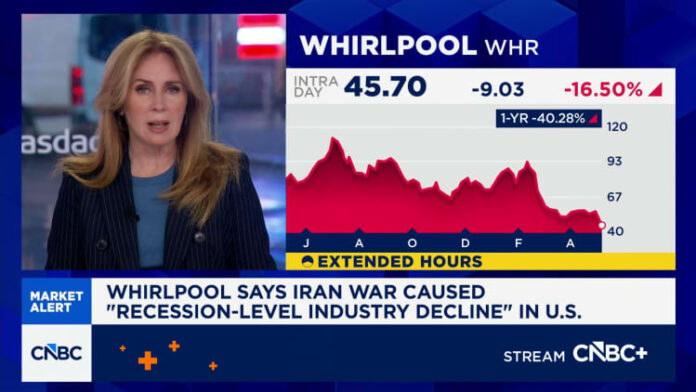
Whirlpool shares plummeted on Thursday following the company’s announcement that the ongoing conflict in Iran has precipitated a significant decline in the U.S. appliance industry. This situation highlights the adverse effects of escalating fuel prices and declining consumer confidence on high-value purchases.
In its earnings report, Whirlpool stated that the war in Iran caused “recession-level industry decline” as consumer confidence sharply fell in late February and March. This stark warning marks one of the most serious corporate assessments of the economic repercussions resulting from the conflict, contrasting with the more robust spending patterns observed in travel and service sectors.
Whirlpool, renowned for its range of home appliances including washers and dryers, saw its stock value drop by 20% in premarket trading. CEO Marc Bitzer indicated that the company is taking swift action to reduce costs and adjust pricing to navigate worsening economic conditions. He noted, “We acted decisively to address pricing and costs in the face of rapid deterioration in macroeconomic conditions.”
Additionally, Whirlpool has significantly reduced its full-year earnings projection, now estimating earnings between $3 and $3.50 per share, down from approximately $6. The company has also decided to suspend its dividend payments to focus on debt reduction. Analysts from JPMorgan attributed the lowered earnings forecast to increased raw material costs, greater net tariff impacts, and challenges with pricing and product mix.
While businesses like Uber and Disney report steady consumer spending in areas such as travel and entertainment, Whirlpool’s situation suggests emerging difficulties in higher-ticket categories, such as kitchen appliances. Consumer confidence, according to a University of Michigan survey, reached a record low in April, driven by rising gasoline prices caused by the Iran conflict. Despite a stock market recovery since mid-April due to hopes for a diplomatic resolution, U.S. oil prices remain elevated above $90 a barrel as market watchers await potential peace proposals.


